
The municipal dumping site at Kot Bhalwal is undergoing one of the most significant environmental transformations in the region’s recent history. In a determined, collaborative effort to heal the local ecosystem and restore the landscape, the Jammu Municipal Corporation (JMC), working hand-in-hand with the Urban Forest Division, Jammu, has officially launched a mega plantation drive. This ambitious initiative is specifically designed to reclaim a heavily utilized waste disposal site and systematically reshape it into a clean, sustainable green zone for the community.
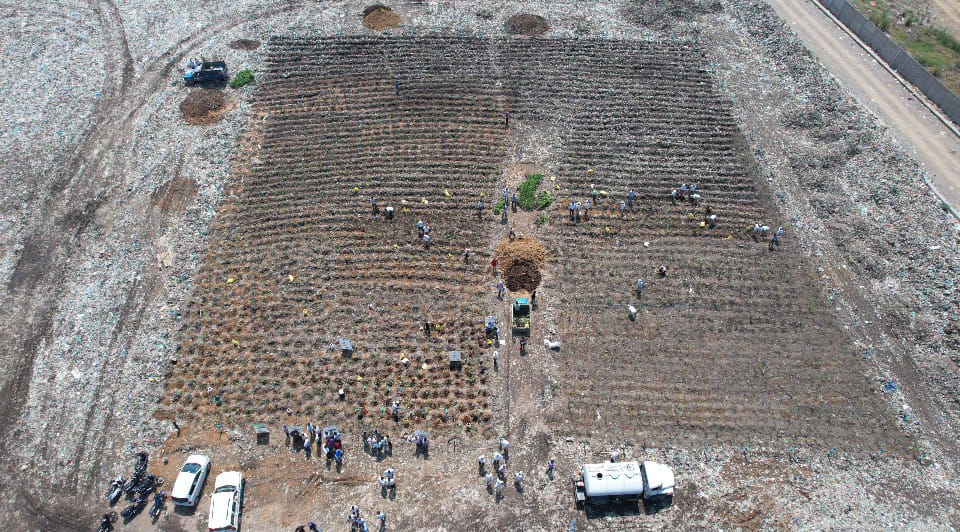
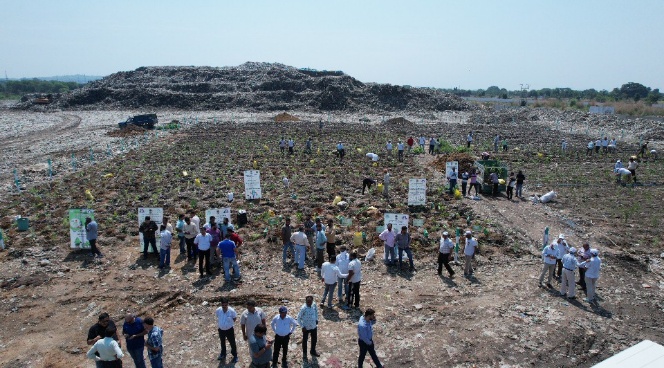
The campaign was inaugurated on-site by JMC Commissioner Dr. Devansh Yadav (IAS), under the structured framework of the National Clean Air Programme (NCAP). At the heart of this drive is the immediate deployment of 5,000 native saplings planted strategically in and around the dumping ground. The primary objective is to establish a dense, protective green buffer zone. Once matured, this natural barrier will actively combat environmental degradation, improve localized air quality, mitigate the impacts of climate change, and provide a healthier living environment for the citizens residing in nearby areas.
To ensure that these trees grow rapidly and survive the challenging soil conditions typical of a disposal site, the project relies on the Miyawaki method. This scientifically proven urban forestry technique involves planting a variety of native species in close proximity to one another. By mimicking the natural layers of a mature forest, the method stimulates rapid vertical growth and fosters a highly resilient, self-sustaining ecosystem in a fraction of the time required by traditional tree-planting methods. Over time, this dense canopy will naturally attract local biodiversity while acting as a shield against dust and noise pollution.
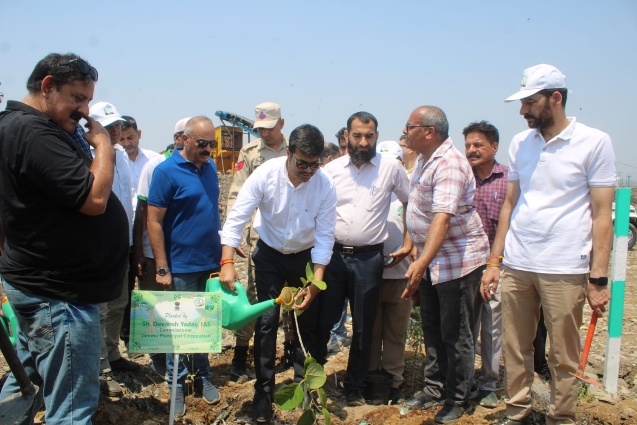
This massive greening effort does not stand alone; it directly complements a profound cleanup operation already well underway at the location. Dr. Devansh Yadav informed that nearly 70 percent of the crucial bioremediation work at the Kot Bhalwal dumpsite has already been successfully executed under the Swachh Bharat Mission-Urban 2.0. With the clearance of legacy waste moving at a steady pace, the remaining remediation work is strictly targeted for completion within the next two months. This synchronized approach ensures that as old waste is cleared away, new life is immediately planted in its place.
Recognizing that the true success of any plantation drive lies in its longevity, the launch concluded with a serious shared commitment. Senior officers, field staff, and forestry representatives present at the site took a collective pledge to ensure the proper care, continuous monitoring, and long-term maintenance of the saplings to maximize their survival rates. By replacing acres of municipal waste with a dense urban forest, the Kot Bhalwalproject stands as a model for ecological restoration, proving that even the most environmentally stressed spaces can be reclaimed for the public good.