by swachhjk November 12, 2025

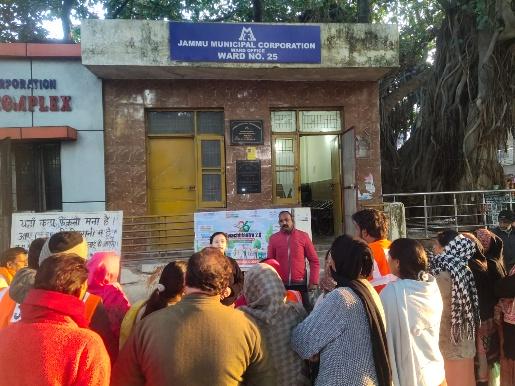
In an inspiring step towards community resilience and preparedness, a Capacity Building Training on Disaster Management was organised today in collaboration with the Mahila Sabha, under the guidance of Dr. Vinod Sharma from Jammu Municipal Corporation (JMC). The session was facilitated by the IEC-JMC and Swaaha IEC (JMC) teams, with a focus on empowering women to play a proactive role in disaster awareness and response.

The training aimed to build practical knowledge on how communities can stay prepared and respond effectively during emergencies like earthquakes, floods, fire incidents, and other natural disasters. The participants were sensitised about the importance of early preparedness, precautionary actions, and staying calm during crisis situations. A special segment of the session was dedicated to basic first aid and CPR (Cardiopulmonary Resuscitation) techniques simple yet life-saving skills that can make a crucial difference in times of emergency. Dr. Vinod Sharma, while addressing the participants, stressed the importance of community-level preparedness and collective action. He explained that while disasters may be unpredictable, our response and readiness can significantly reduce their impact. He encouraged participants to become informed and trained citizens who can act quickly and guide others during emergencies.

The atmosphere throughout the session was highly engaging. Members of the Mahila Sabha participated actively sharing personal experiences, asking questions and discussing the challenges faced during past disaster events. Many women expressed how such training gave them the confidence to act decisively and assist their families and neighbours in emergencies. A key takeaway from the session was the crucial role of women in disaster management. As first responders within households and communities, their awareness and preparedness can save lives. The programme also underscored how empowering women with such skills contributes not only to safety but also to strengthening the social fabric of the community.

The training concluded with a collective commitment from all participants to spread disaster preparedness awareness within their localities. The group resolved to remain vigilant, informed and united in times of crisis while also promoting public hygiene and safety as part of overall community wellbeing.

Initiatives like this go beyond awareness they build confidence, unity and responsibility. By equipping the Mahila Sabha with knowledge and skills, JMC’s IEC and Swaaha IEC teams have taken another meaningful step toward nurturing a culture of preparedness and resilience across Jammu city.When awareness turns into action and citizens become first responders, a community truly becomes safe, strong and self-reliant.

by swachhjk November 11, 2025

With the growing focus on sustainable living and waste reduction, the Badamibagh Cantonment Board organised a Capacity Building Programme on 8th November 2025 at the Cantonment Board Public School, Sonwar. The programme was aimed at empowering the local community, sanitation workforce and resident groups to work hand in hand for a cleaner and greener Badamibagh. The event brought together a diverse and dedicated group of participants Sanitary Inspectors, Supervisors, Sanitary Staff, RWAs, Ward Presidents, Teachers and Local Residents. Everyone shared one common goal: to strengthen community participation in sustainable waste management and improve cleanliness in their surroundings.

The session was conducted by Mr. Tabraiz Madani, a Capacity Building Expert and resource person for the programme. In his engaging and interactive talk, Mr. Madani emphasized that true cleanliness begins at home with segregation of waste at source. He explained that when households separate wet and dry waste before disposal, it not only helps sanitation teams manage waste more efficiently but also reduces the overall burden on landfills.

He further highlighted the importance of door-to-door waste collection, encouraging residents to cooperate with sanitation workers by ensuring timely and proper handover of segregated waste. Drawing attention to the rising threat of single-use plastic, Mr. Madani urged the community to make conscious choices to avoid disposable plastics and shift towards sustainable, biodegradable alternatives in daily life. One of the key discussions of the day revolved around the role of RRR Centres (Reduce, Reuse, Recycle). Mr. Madani explained how these centres form the backbone of circular waste management by diverting reusable and recyclable materials away from dumpsites. Participants were shown how simple household habits such as reusing old containers, repairing instead of discarding, and donating usable items can contribute to waste reduction in a big way.

What truly stood out was the active involvement of the participants. Local residents spoke about the need for stronger awareness at the household level, while sanitation workers shared their on-ground experiences and challenges. Teachers discussed how schools could serve as ambassadors of cleanliness by involving students in eco-club activities and zero-waste campus drives. The session evolved into a lively dialogue, filled with practical suggestions and shared experiences.

By the end of the programme, there was a clear sense of unity and responsibility among all present. Together, the participants pledged their support to the Cantonment Board’s mission of creating a cleaner, greener and healthier Badamibagh. The Board members expressed gratitude to the community for their proactive approach and assured continued guidance, technical support, and awareness activities in the days ahead.

This initiative by the Badamibagh Cantonment Board was not just a training session it became a community movement in itself. It reminded everyone that cleanliness is not the sole duty of the authorities but a shared responsibility. When citizens, officials, and sanitation workers come together with a sense of purpose, the journey toward a sustainable and beautiful Badamibagh becomes not just possible, but inevitable.

by swachhjk November 11, 2025

In a continued effort to nurture eco-conscious campuses under the Swachh Bharat Mission–Urban 2.0 (SBM-U), the Swaaha IEC Team of Jammu Municipal Corporation (JMC) carried out a field visit across educational institutions in the city. The visit aimed to assess environmental practices and inspire students and staff to strengthen their green commitments.

The team visited Kendriya Vidyalaya Bantlab, Government Higher Secondary School Bakshi Nagar, Government Higher Secondary School Paloura and May Fair International School. Each institution showcased unique efforts toward sustainability right from waste segregation to student-led plantation drives.

The evaluation revolved around six key parameters: solid waste management, energy efficiency, greenery and plantation, cleanliness and hygiene, environmental education and plastic-free practices. Schools demonstrated responsible waste handling through proper segregation and composting, while several campuses have begun shifting to LED lighting and exploring solar power for basic operations.

Students proudly presented their green corners, herbal gardens, and art projects made from recyclables. At Government Higher Secondary Paloura, an enthusiastic group of eco-club members shared how they monitor waste segregation daily. Similarly, the staff at May Fair International School highlighted their weekly cleanliness drives and pledge against single-use plastic, setting an inspiring example for others. The IEC team interacted with students, emphasizing how small, consistent actions like using reusable bottles, switching off lights, and planting trees can collectively make a big difference. The visit wasn’t just about inspection; it was a learning exchange that celebrated the spirit of ownership and responsibility toward the environment.

In conclusion, the Swaaha IEC Team appreciated the proactive efforts of the schools and colleges and encouraged them to sustain and expand their initiatives. JMC reaffirmed its commitment to support such institutions with continued IEC engagement, awareness sessions and technical guidance under SBM-U. These visits under the Green Campus Initiative are not just evaluations they are milestones in shaping young environmental stewards who will lead Jammu toward a cleaner, greener future.

by swachhjk August 20, 2025

The Har Ghar Tiranga Campaign 2025 in Jammu & Kashmir was more than a patriotic celebration it became a movement of unity, cleanliness, and people’s participation. Between 2nd and 15th August, all 80 Urban Local Bodies (ULBs) across the Union Territory came together to ensure that the Tiranga reached every home and every heart.

The campaign stood out for its scale and inclusiveness. Across J&K, 3,230 cleanliness drives were carried out in the run-up to Independence Day, ensuring that towns and wards were vibrant and celebration-ready. On August 16th and beyond, the spirit of responsibility continued with 350 post-Independence Day cleanliness drives, reinforcing the message that true patriotism goes hand in hand with keeping our surroundings clean.

Transformation was at the heart of the campaign. A total of 410 Garbage Vulnerable Points (GVPs) and Community Toilet Units (CTUs) were rejuvenated, turning neglected spaces into symbols of pride. Alongside this, 378 RRR (Reduce, Reuse, Recycle) Centres were mobilized, linking the celebration of the national flag with the values of sustainability and responsible waste management.

Community participation gave the campaign its soul. 620 women from Self-Help Groups (SHGs) actively took part in creating Tirangas, making the movement not only patriotic but also a testimony to women-led change. In addition, massive outreach efforts ensured inclusivity 25,780 door-to-door campaigns were conducted, taking the message of Har Ghar Tiranga and Swachhata directly to households across the Union Territory.

Equally important was the eco-conscious approach. At 268 flag hoisting sites, citizens celebrated Independence Day free from single-use plastic, showing how traditions can blend seamlessly with sustainability.

The Har Ghar Tiranga campaign in Jammu & Kashmir left behind more than just memories of flags and celebrations. It created cleaner spaces, stronger communities and a renewed sense of national pride, proving that when people come together for a cause, the results echo far beyond the occasion itself.

by swachhjk August 7, 2025

Every year, the sacred journey of Shri Amarnath Ji Yatra brings lakhs of devotees together for a spiritual experience in the pristine mountains of Jammu & Kashmir. However, with such an influx comes a considerable challenge: managing the waste generated along the Yatra route, particularly at the base camps and lodgement centers. In 2025, the focus was sharp not just on waste disposal, but on turning waste into a resource.

Two major lodgement centers Bhagwati Nagar Base Camp and the Railway Head Complex served as the starting points for many yatris. Each day, approximately 80–200 kilograms of dry waste was collected from these sites. This included single-use plastic packaging, PET bottles, wrappers and other recyclable materials.

What made 2025 remarkable was the scientific processing and 100% recovery of this dry waste, thanks to the efficient system put in place by the authorities in collaboration with the Material Recovery Facility (MRF) at Bandurakh (MRF: Material Recovery Facility).

Once collected daily, the waste was transported to the Bandurakh MRF where it underwent two key processes:

  • Polypropylene (PP) Article Processing: All polypropylene-based dry waste was fed into shredding machines, where it was converted into plastic granules. These granules are valuable raw materials for plastic manufacturers who repurpose them into useful products like dustbins, plastic chairs and buckets, contributing to a circular economy.
  • Polyethylene Terephthalate (PET) Waste Processing: For PET bottles and containers, baling machines were used to compress the waste into large bundles. These bales are then sent to certified recycling units, where the PET is transformed into polyester yarns a vital input in the textile industry for making fabrics and clothing.

Both processes ensured that waste never ended up in landfills or water bodies, but instead, re-entered the economy as valuable products.

At the heart of this transformation were four dedicated workers stationed at the Bandurakh MRF, who managed the segregation, shredding, baling and dispatching processes under the supervision of the plant-in-charge. Conversations with the MRF supervisor revealed how each type of dry waste was handled with care and sent only to certified recyclers, ensuring environmental compliance and maximum value recovery.

The success of this initiative lies not just in processing numbers, but in the vision of creating a cleaner, greener Yatra experience and setting a model for pilgrimage-linked waste management. This success story of dry waste management during Shri Amarnath Ji Yatra 2025 is a shining example of what responsible systems, dedicated manpower and eco-conscious planning can achieve. It is proof that even temporary events can leave behind a legacy of sustainability where waste becomes wealth and cleanliness becomes a collective commitment.

by swachhjk August 4, 2025

Just outside the Railway Station at the Shiv Mandir Lodgement Centre, the Duggar Manch team staged a powerful street play during Shri Amarnath Ji Yatra 2025. More than a performance, it was a living expression of duty: segregate waste at source, ban single-use plastic and collectively uphold a clean and green pilgrimage.

It wasn’t a scripted lecture but genuine storytelling. Actors broke the fourth wall calling out to pilgrims and locals, miming the tossing of a plastic bottle, sourcing compost and depicting how small slips harm the sacred surroundings. The audience didn’t just watch, they felt caught in moments of choice. The emotion was raw and immediate, not rehearsed.

This awareness drive drew strength from unity. Alongside Duggar Manch, JMC supervisors, Swaaha executives and Tulip interns joined in distributing reusable cloth bags, guiding proper use of colored bins, and answering curious questions from onlookers. Their collective energy turned the play from a solo show into a community movement.

The performance was a practical example of Swachh Bharat Mission‑Urban 2.0’s principles:

  • Source segregation into wet, dry and hazardous waste
  • Strict elimination of single-use plastic
  • Behavioral change through public engagement

This Nukkad Natak wasn’t just theatre it was a mirror. A mirror showing pilgrims and citizens their role in keeping this sacred journey clean. It showed how even small choices like using a cloth bag or dropping paper in the right bin can preserve the piety and purity of the Yatra.

That evening, under the open sky, Duggar Manch and the entire team turned awareness into emotion, emotion into decision and decision into action. It was real. It was needed. And most importantly it was ours.

by swachhjk July 12, 2025

The Safai Apnao, Bimari Bhagao (SABB) campaign, launched by MoHUA under Swachh Bharat Mission‑Urban, is underway from 1 to 31 July 2025, targeting urban cleanliness and disease prevention during the monsoon.

Why SABB Matters

  • Monsoon risks: Heavy rains can lead to waterborne and vector‑borne diseases like dengue, malaria and diarrhoea.
  • Six key pillars: Clean Hands, Homes, Neighbourhoods, Toilets, Drains, Public Spaces this multifaceted strategy reinforces hygiene, sanitation and behaviour change.

     On-the-Ground in Jammu & Kashmir

Jammu – Airport Road, Satwari

Local staff and volunteers joined a cleanliness drive to sweep public footpaths. Teams removed garbage, weeds and debris, ensuring a safer and healthier pedestrian zone.

Pulwama Municipal Council

ULB staff mobilized for:

  • Drain clearing
  • Cleaning public spaces
  • Neighbourhood cleanliness initiatives
    These actions reinforce civic pride and urban hygiene.

Tangmarg (Gulmarg) – Clean Hands Session

Students participated in interactive handwashing demos. They practiced proper techniques, took pledges, and committed to embodying the campaign’s vision in their daily routines.

Srinagar Municipal Corporation – Wards 35 & 28

  • Door-to-door awareness: Volunteers engaged households on waste management.
  • Sanitation drives in public areas.
  • School demonstrations emphasized proper hand hygiene a key pillar of the campaign.

Kupwara Municipal Council

  • Cleaned drains & public zones.
  • Launched neighbourhood hygiene drives.
  • Organized school sessions to promote proper handwashing practice.

Cantonment Board Srinagar

Coordinated with Swachhata Executives and local residents to:

  • Demonstrate best-practices in hand hygiene.
  • Clean homes, drains, water bodies, toilets, public spaces and roadsides.

ITI Kathua

Under the slogan “Safai Apnao, Bimaari Bhagao”, awareness sessions reiterated how simple actions like handwashing can prevent diseases like cough, flu and diarrhoea. Other efforts included:

  • Chaar Bin Apnao, Prakriti Bachao
  • RRR Centre awareness
  • Swachhata App orientation for grievance reporting.

A Campaign with National Backing

This campaign is part of MoHUA’s annual monsoon push (1–31 July) involving close collaboration across ministries especially with Health, Rural Development, Women & Child Development, and Drinking Water & Sanitation . It’s strategically aligned with MoHFW’s “STOP Diarrhoea Campaign”, using a “Protect–Prevent–Treat” toolkit (PPT Strategy).

  • Rapid assessments to spot high-risk zones.
  • Public and community toilet drives.
  • Water-quality sampling & safe drinking initiatives.
  • Door‑to‑door outreach & IEC campaigns.
  • Activities and data are reported weekly via the Swachhatam portal SBM Urban.

From bustling footpaths to quiet classrooms and from urban wards to cantonment zones, SABB is igniting a powerful, multi-dimensional wave of cleanliness and awareness reaching children, residents, sanitation workers and local bodies alike.

Clean Hands sessions in schools are teaching lifelong hygiene habits.
Toilet, drain and neighbourhood drives are engineering cleaner, healthier towns.
Awareness campaigns, mobile apps, pledges and active civic engagement are embedding a culture of responsibility.

The “Safai Apnao, Bimari Bhagao” campaign rolled out by MoHUA’s Swachh Bharat Mission‑Urban from 1–31 July 2025 is now taking root in every nook and corner of Jammu & Kashmir. Through hands-on cleanliness drives, school sessions and public awareness initiatives, the campaign is empowering people kids, adults, ULB staff to adopt hygienic habits and steer away from disease.

As monsoon challenges persist, such proactive, community-driven efforts are vital for a disease-free, healthy J&K.

by swachhjk July 4, 2025

A significant plantation drive was held on 27th June at the picturesque JDA Park, Trikuta Nagar, reaffirming Jammu’s commitment to a greener and cleaner future. The event witnessed the esteemed presence of several dignitaries and leaders who came together to promote environmental sustainability through collective action.

Gracing the occasion was Dr. Jitendra Singh Ji, Minister of State (Independent Charge) for several key portfolios including the Ministry of Science and Technology, Ministry of Earth Sciences, Prime Minister’s Office, Ministry of Personnel, Public Grievances and Pensions, Department of Atomic Energy and Department of Space. Dr. Singh emphasized the need for synchronized efforts between governance and grassroots participation to combat climate change and restore ecological balance.

The event was also honored by the presence of:

  • Sh. Vikram Randhawa, Hon’ble MLA, Jammu East
  • Sh. Sat Sharma Ji, BJP State President, J&K
  • Sh. Sunil Sharma Ji, Hon’ble MLC and Leader of Opposition, J&K Legislative Assembly
  • Sh. Naresh Singh Jasrotia Ji, BJP District President, Jammu District

Each of these leaders took part in planting saplings, sending a powerful message about the role of leadership in promoting environmental stewardship. Speaking on the occasion, they collectively highlighted how tree plantation is not just a symbolic gesture but a crucial step toward mitigating the effects of global warming, reducing pollution and ensuring a healthier environment for future generations.

The serene setting of JDA Park served as the perfect backdrop for the drive, where community members and party workers also participated enthusiastically. The event not only encouraged afforestation but also aimed to raise public awareness about the significance of green spaces in urban areas.

This plantation drive was a step in the right direction bringing together policymakers, legislators and the community on a shared platform of environmental responsibility.