
The annual Mata Kheer Bhawani Mela at Tullamulla is a time of deep spiritual reflection, traditionally drawing tens of thousands of devotees to the sacred shrine. However, hosting a gathering of this scale historically brings a massive environmental challenge in the form of plastic waste. To tackle this issue head-on, the Municipal Council Ganderbal launched an ambitious eco-initiative under the banner “Take the Bag, Leave the Plastic.” The program aimed to pivot away from single-use plastics and lay a strong foundation for transforming this grand pilgrimage into a sustainable, Zero Landfill event.
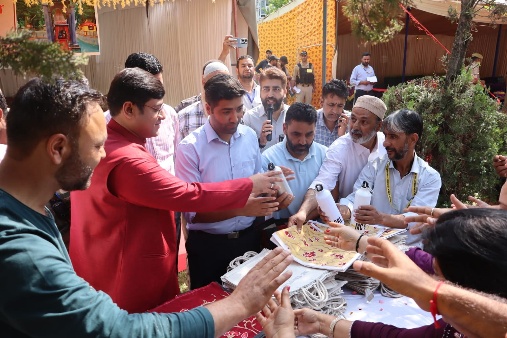
The pioneering initiative was officially inaugurated by the Worthy Deputy Commissioner Ganderbal, Shri Jatin Kishore, IAS. Standing alongside him to spearhead the drive were the Assistant Commissioner Revenue Ganderbal, the CEO of the Municipal Council Ganderbal, and dedicated experts from the Swachh Bharat Mission. Their administrative leadership sent a powerful message to the public, emphasizing that environmental protection and spiritual devotion go hand in hand, and that keeping the sacred pilgrimage site clean and green is a shared civic responsibility.
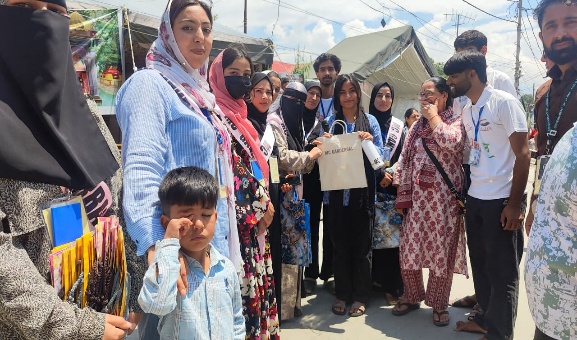
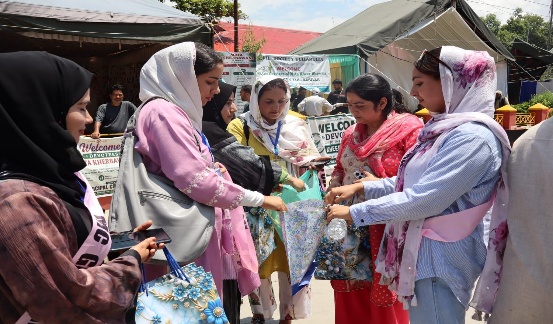
The true driving force on the ground was a well-coordinated network of Self-Help Group Community Mobilizers, the Municipal Council Information, Education, and Communication Team, general municipal staff, and Swachhata Executives. Instead of waiting behind static stalls, these dedicated teams actively walked into the crowds to interact directly with the massive gathering of fifty thousand to sixty thousand devotees. They conducted live, real-time awareness sessions highlighting the severe long-term harms of plastic pollution while offering immediate, practical alternatives to the pilgrims.
To break the cycle of single-use items, the ground teams physically exchanged plastic polythene bags brought by the devotees for seven hundred and fifty eco-friendly alternatives made of jute, cloth, and paper. In tandem, they distributed two hundred and forty reusable steel water bottles to significantly cut down on the consumption of disposable plastic bottles during the festival. This direct intervention transformed the narrative from a simple administrative cleanup drive into a deeply personal, cooperative community mission.
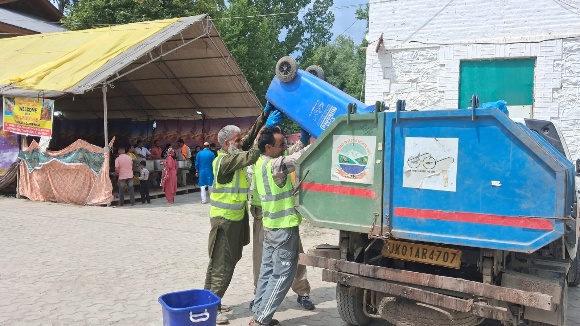
Managing the waste generated by such a large crowd required a disciplined and massive cleanup operation. The Municipal Council staff and Swachhata Executives successfully collected and segregated a staggering sixteen tons of total waste during the mela. This included eleven tons of wet waste, which was safely diverted for organic composting, and five tons of dry waste, which was meticulously sorted for recycling to prevent it from choking local landfills.
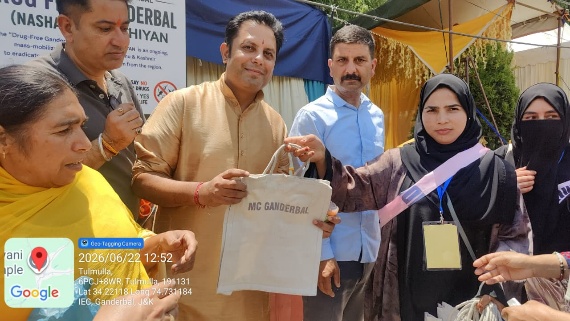
The response from the pilgrims was overwhelmingly encouraging, with thousands willingly handing over their plastics and praising the administration’s foresight. Devotees noted that the sacred environment of the Tullamulla shrine felt cleaner, more dignified, and deeply respected throughout the event. By turning a high-density religious festival into a flawless model for waste segregation and plastic reduction, Municipal Council Ganderbal has proven that sustainable tourism and cultural heritage can coexist beautifully, setting a new benchmark for green governance across the region.