by swachhjk July 4, 2025

As the sacred journey of Shri Amarnath Ji Yatra 2025 begins, the spirit of devotion is not just reflected in the chants of “Bum Bum Bhole” echoing through the air, but also in the quiet dedication of those working behind the scenes to ensure a smooth and safe pilgrimage for thousands of yatris arriving from across the country.

One such effort unfolded at Yatri Niwas, Bhagwati Nagar a key halt for devotees entering Jammu before embarking on the divine trek. Under the insightful leadership of Worthy Commissioner Dr. Devansh Yadav (IAS), a detailed inspection was carried out to assess the preparedness of sanitation facilities and ensure all systems were geared up for the massive influx of pilgrims.

Dr. Vinod Sharma, Health Officer of Jammu Municipal Corporation, accompanied by Sanitation Officer Mr. Arun Nayar, personally visited the premises to monitor the ground situation. Walking through the corridors and sanitation blocks, the team meticulously reviewed the waste disposal points, toilet facilities, water availability and overall cleanliness of the complex.

What made this inspection stand out was its human-centric approach Dr. Sharma made it a point to interact directly with the yatris. He listened to their feedback with empathy and addressed their concerns, reinforcing the administration’s commitment to making this yatra not only spiritually uplifting but also safe and hygienic.

But the efforts didn’t stop there.

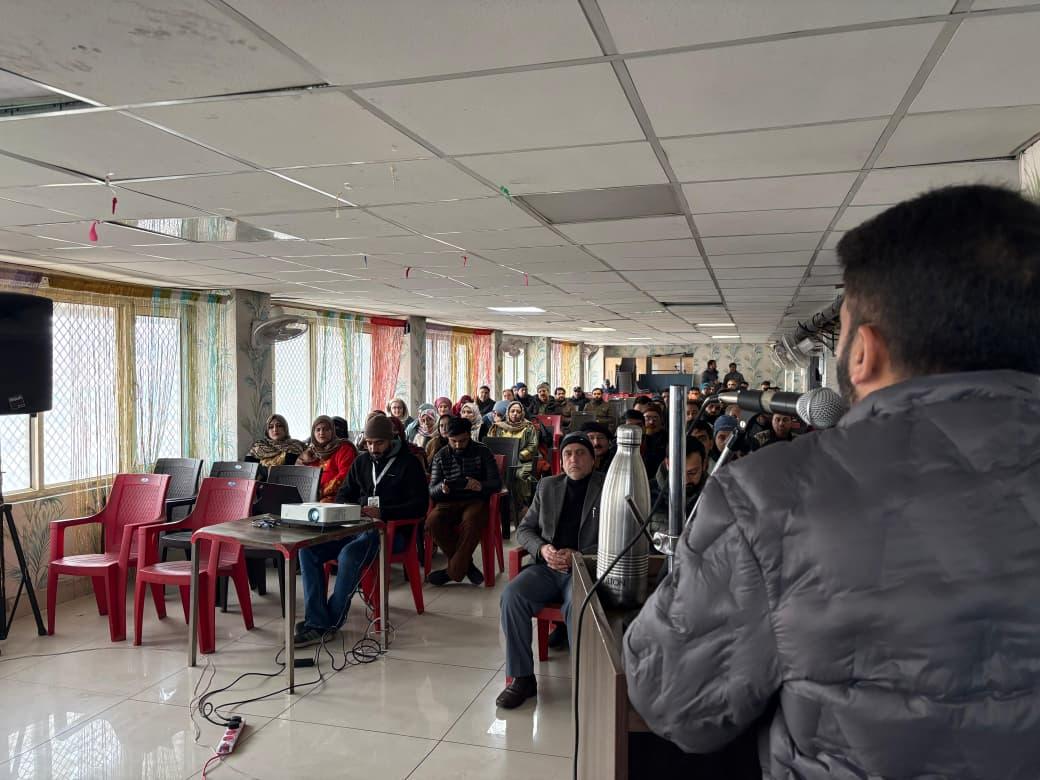
Recognizing that lasting change stems from capacity and awareness, a capacity-building session was also held on the same day for on-ground sanitation workers and support staff. This hands-on training session was organized under Dr. Sharma’s guidance and delivered by IEC Executive Mr. Ankush Sharma and Swachhta Executive Mr. Kapleshwar Sharma.

The session touched upon key topics such as:

  • Proper segregation of waste using color-coded bins
  • Safe disposal of biomedical and hazardous waste
  • Maintaining high standards of toilet and bathing area hygiene
  • Prompt response to yatri complaints
  • Eco-conscious practices to reduce plastic usage during the yatra

The session wasn’t just a monologue—it was a platform for dialogue, with staff encouraged to share their on-ground challenges and brainstorm practical solutions. Posters, role-plays and live demonstrations made the learning process engaging and relatable.

A Collective Step Towards a Swachh and Safe Yatra

This blend of on-ground inspection and meaningful training paints a powerful picture one where administrative readiness is paired with human sensitivity. As thousands prepare to ascend toward the holy cave, it is these unseen warriors—sanitation workers, officers and trainers—who lay the foundation for a truly sacred journey.

Through such initiatives, Jammu Municipal Corporation, under the guidance of its visionary leadership, is reaffirming that cleanliness is the first offering to the divine.

With folded hands and a clean path ahead, Shri Amarnath Ji Yatra 2025 marches on—with devotion in hearts and duty in action.Har Har Mahadev! Jai Baba Barfani!
Stay tuned for more updates from the heart of the Yatra

by swachhjk June 30, 2025

In a commendable move towards environmental protection, the Municipal Committee Khrew recently organized a successful Ban on Single-Use Plastic Drive. The initiative focused on raising awareness about the adverse effects of single-use plastics and promoting sustainable practices among local vendors and shopkeepers.

As part of the drive, plastic and polythene materials were collected from various shops and street vendors across the town. The effort not only helped in physically reducing plastic waste from public spaces but also sparked meaningful conversations within the business community about eco-conscious alternatives.

By encouraging the shift away from harmful plastic usage, MC Khrew continues to demonstrate its unwavering commitment to a cleaner, greener, and more responsible future. This drive stands as a shining example of how collective action can pave the way for a more sustainable tomorrow.

by swachhjk June 30, 2025

 How One Man in Tral is Turning the Tide Against Plastic

Tucked in the heart of Tral town, surrounded by the aroma of fresh greens and the cheerful chatter of morning customers, stands a modest vegetable stall vibrant, simple and quietly revolutionary.

Behind this stall is Zahid Shafi Dar, a resident of Shariefabad, Tral, Anantnag whose small step is leaving a large footprint on the path to sustainability.

What makes Zahid’s stall different? It isn’t just the neatly stacked cauliflowers or the perfect bunches of bananas. It’s the cloth bags he hands out with every purchase a conscious decision he made to reduce plastic use and encourage a greener lifestyle in his community.

“Plastic is everywhere… and it doesn’t go away,” Zahid shares, his hands busy sorting through crates of tomatoes and okra. “I thought why not start with myself?”

In a world where plastic often feels inescapable, Zahid’s effort stands out. And perhaps what makes it even more inspiring is its simplicity. No loud campaigns. No banners. Just a quiet shift from plastic to fabric that speaks volumes.

Every cloth bag he gives away replaces a plastic one that might have ended up in a drain, a field, or worse a river. Multiply that by hundreds of customers a month and you begin to see the kind of difference a single stall can make.

Customers have noticed. Some now return with the same cloth bag, proud to be part of something meaningful. Children ask their parents why the bag is different. Conversations start. Habits begin to shift.

And that’s how change works one bag, one person, one choice at a time.

Zahid’s humble initiative is a shining example of the kind of local leadership our towns and cities need. His stall isn’t just a place to buy vegetables anymore it’s a small, powerful message hanging right there with the bunches of bananas: Sustainability starts with us.

In a time when climate action often feels like a distant goal handled by big policies and governments, Zahid reminds us that every small step matters especially when it’s taken close to home.

So, the next time you walk through a local market, think of Zahid. And maybe, carry your own cloth bag.

by swachhjk June 23, 2025

Jammu, June 21, 2025  Under the calm early morning skies, the lush lawns of Bhartiya Yog Sansthan came alive with energy, enthusiasm and a shared spirit of wellness as Jammu celebrated International Yoga Day 2025 with heart and soul. Gracing the occasion as the Chief Guest was Dr. Devansh Yadav, IAS, Commissioner of Jammu Municipal Corporation and Mission Director of Swachh Bharat Mission 2.0 Urban for Jammu & Kashmir.

The event wasn’t just a gathering of yoga mats and asanas it was a celebration of community, culture and conscious living.

A special highlight of the day was a compelling Nukkad Natak (street play) titled “Naa Thapad Se Naa Gaali Se, Ab Samjhayenge Taali Se”, performed by the talented artists of Kalakar Manch. Organized by JMC in collaboration with the Department of Art, Culture and Languages, the street play used humour and raw realism to drive home a powerful message: change doesn’t come through punishment, but through encouragement and collective applause. The performance struck a chord with the audience, reflecting the ethos of the Swachh Bharat Mission that real transformation begins when citizens are positively involved.

Behind the seamless organization were Dr. Vinod Sharma, Health Officer, JMC and Dr. Priyanka Malhotra, VAS, whose meticulous planning ensured that everything from yoga sessions to community interactions ran like clockwork.

Adding a sustainable edge to the celebrations was the now-familiar and much-loved “Plastic Lao, Thela Lejao” campaign. Participants were invited to bring their household plastic waste and exchange it for eco-friendly cloth bags. The response was heartening over 450 cloth bags were distributed, promoting the message of plastic-free living. Dr. Yadav not only applauded the effort but personally interacted with the citizens participating in the drive, encouraging them to continue making conscious choices.

Radio Mirchi 98.3 amplified the campaign’s reach as the official radio partner, bringing updates, conversations, and behind-the-scenes moments to a larger audience across the city.

As mats were rolled up and goodbyes exchanged, one thing was clear Jammu’s Yoga Day was more than just an event. It was a movement. A reminder that health and hygiene go hand in hand. That Swachhta and Swasthya are two sides of the same coin. And that when a city comes together in body, mind and mission real change is not just possible, it’s inevitable.

by swachhjk June 23, 2025

Jammu 21st June 2025

This Saturday brought more than just the weekend it brought with it another meaningful chapter in the ongoing Har Shaniwar Swachhta Tyohar campaign. Held at M.A.M College, Jammu (Ward 19), a special Cleanliness Awareness Workshop was conducted to engage students and faculty in conversations around cleaner habits and greener living.

The session was led by Swaaha Swachhta Executives, in collaboration with dedicated staff from the Jammu Municipal Corporation (JMC). Together, they created an open and interactive space where young minds could understand the “why” and “how” of solid waste management starting right from their own homes.

What the Workshop Covered:

Participants were introduced to a range of practical and easy-to-adopt waste management practices.
From how to properly segregate wet and dry waste to learning about the RRR (Reduce, Reuse, Recycle) Centre and home composting techniques, the workshop wasn’t just about awareness it was about action.

Live demonstrations helped simplify the process of household segregation and composting, breaking down technical jargon into everyday habits that everyone could adopt. The students, in turn, responded with enthusiasm asking questions, sharing ideas, and even coming up with ways they could take the message forward in their own communities.

Why It Mattered:

The idea was simple: small steps lead to big change.
By promoting simple daily habits like separating kitchen waste or reusing old items, the workshop highlighted how each citizen has a role to play in keeping Jammu clean. And what better place to start than with students the changemakers of tomorrow?

A Youth-Led Clean Future

One of the key takeaways from the session was the importance of youth participation. The campaign believes that when young people understand the impact of their choices, they become powerful ambassadors of swachhta (cleanliness) in their homes, colleges and beyond.

The success of this workshop adds momentum to the larger vision of the Har Shaniwaar Swachhta Tyohaar a campaign that brings consistent, meaningful change to the city, one Saturday at a time.

“Every clean corner begins with a conscious choice. And this Saturday, M.A.M College made that choice loud and clear.”

by swachhjk June 23, 2025

As part of the ongoing Taali Campaign a vibrant drive to raise sanitation awareness and spark community involvement several Nukkad Nataks (street plays) have been staged across Srinagar, each echoing the message of a cleaner, greener city. One such powerful performance unfolded on 21st June in Ward 12, leaving a lasting impression on all who witnessed it.

Organized by Swaaha Swacchta Executives in collaboration with the Srinagar Municipal Corporation (SMC) and the J&K Academy of Art, Culture and Languages, the event was more than just a play it was a movement in motion.

The local community turned up in large numbers, gathering around with visible excitement and curiosity. The street transformed into a stage as young performers brought critical issues to life waste segregation, household hygiene, responsible disposal and the role of citizens in upholding public cleanliness.

Through sharp dialogues, compelling expressions and relatable storytelling, the play not only entertained but also educated. Children giggled, elders nodded thoughtfully and young adults stood engaged, all absorbing the essence of the message: “Swachh Srinagar is a shared responsibility.”

The beauty of this initiative lay in its simplicity. No heavy lectures or formal presentations just culture meeting civic sense in a language the community understands best.

The success of this Nukkad Natak is a testament to the power of art as a tool for change. By blending traditional performance with public awareness, the campaign is not only informing but also inspiring action at the grassroots level.

This event in Ward 12 stands as a shining example of how local participation and cultural engagement can come together to amplify the goals of Swachh Bharat Mission Urban 2.0 step by step, street by street.

Cleanliness is not a one-time act; it’s a community culture. And in Ward 12, that culture is taking root.

by swachhjk June 20, 2025

In a determined move towards a cleaner, greener Srinagar, the Srinagar Municipal Corporation (SMC) carried out an intensive anti-polythene drive today in Ward 22, in close collaboration with the field executives of Swaaha Swachhta.

This focused inspection drive was part of the ongoing campaign to enforce the complete Ban on Single-Use Plastics and polythene bags, a critical step in curbing urban pollution and protecting local ecosystems.

What Happened on Ground?

The team hit the streets of Ward 22 with a clear mission—identify, educate and enforce.

  • Shop and Vendor Inspections:
    SMC officials, along with Swaaha Swachta executives, conducted spot-checks across roadside vendors and local shops. Their focus was straightforward: ensure that no polythene bags or banned plastic items were being used or stocked. Any signs of non-compliance were noted immediately.
  • On-the-Spot Awareness Sessions:
    Rather than just penalizing, the approach also prioritized education. Swaaha’s field executives engaged directly with shopkeepers, sensitizing them about the dangers of polythene—how it chokes drains, harms animals, and contaminates soil and water. They also introduced vendors to practical alternatives like cloth bags, jute carriers, and biodegradable packaging materials.
  • Strict Enforcement & Penalties:
    Vendors found using banned materials faced immediate penalties, ranging from monetary fines to warnings. Repeat or habitual offenders were clearly cautioned about possible sealing of their shops, as per SMC’s enforcement protocols.

Why It Matters

This drive is more than just a crackdown it’s a statement of intent. The city administration is making it clear that casual use of polythene will no longer be overlooked. By combining firm enforcement with constructive dialogue, the SMC and Swaaha team are helping build a more responsible and aware citizen base.

What’s Next?

This inspection in Ward 22 is just one of many such operations planned across the city. The message is simple yet strong Srinagar is moving forward and polythene has no place in its future.

by swachhjk June 18, 2025

In the heart of Srinagar’s iconic Lalchowk, voices rose, not in anger, but in harmony for change, change that clapped back at indifference, pollution and societal apathy. Under the resonant slogan “Na Thappad se, Na Gaali se — Ab Samjhayenge Taali Se,” a thought-provoking Nukkad Natak unfolded as part of the Taali Campaign a clarion call for civic responsibility and cleaner cities.

This vibrant event was more than a performance; it was a movement. Spearheaded by Srinagar Municipal Corporation (SMC) in collaboration with the Jammu and Kashmir Academy of Art, Culture and Languages, FM Mirchi, and the ever-energetic Swaaha Swachhata Executives, the initiative successfully turned a bustling street corner into a powerful platform for behavioral change.

A Street Play with a Purpose

The play captivated its audience with a mix of raw emotion, satire and humor — drawing attention to everyday sanitation issues that often go ignored. But what made this initiative stand out was its tone not scolding, not threatening, but celebratory and inclusive, inviting everyone to be part of the solution.

Key Themes that Echoed Through the Streets

1. Ban on Single-Use Plastics:
Through relatable characters and scenes, the natak showcased the silent yet severe damage caused by plastics choking drains, harming animals, and burdening the earth. The performers urged citizens to embrace cloth bags, sustainable packaging and conscious consumption.

2. Use Toilets Properly:
Open defecation and urination were tackled head-on not with shame, but with empathy and education. The play emphasized dignity, cleanliness and the right to access hygienic sanitation for all.

3. Segregate Waste The Chaar Bin Concept:
An engaging skit segment brought the “Four Bin” system to life  Red for Rejects, Blue for Recyclables, Green for Wet Waste, and Black for Sanitary Waste. This simplified, color-coded approach resonated well with all age groups and encouraged household-level segregation.

4. Reduce, Reuse, Recycle:
A clever portrayal of daily life waste  plastic bottles turned planters, old clothes reused creatively showed how the 3R mantra isn’t just a theory, but a lifestyle.

5. Say No to Littering in Streets and Drains:
The final act of the play highlighted the ripple effects of careless littering from choked city drains to water pollution. The message was loud and clear: Streets are not dustbins. Our drains are not dumping grounds.

 Claps, Cheers and Change

By the end, the crowd didn’t just watch  they clapped along. The performers broke the fourth wall, inviting onlookers to join the chorus of cleanliness and responsibility. Every clap symbolized not just applause, but a promise.

A Ripple Effect

The Taali Campaign’s Nukkad Natak at Lalchowk is a stellar example of how street art can fuel public awareness and shape urban behavior. It reminds us that change doesn’t always need a stick  sometimes, a sincere clap, a heartfelt performance and a clear message are enough to stir a revolution.

by swachhjk June 14, 2025

June 13th marked a meaningful step forward in the journey toward cleaner, greener cities in Kashmir. A Capacity Building Training Program was successfully held at the Town Hall, Municipal Council Pulwama, bringing together sanitation staff from all five Urban Local Bodies (ULBs) of the district under one roof.

The session wasn’t just about training it was about transformation. Ground-level workers, who are the backbone of urban sanitation, actively participated and engaged in discussions around crucial topics like source segregation of waste, the correct usage of the four-bin system and practical strategies to reduce plastic pollution in our everyday lives. A major focus was placed on eliminating single-use plastics an issue that continues to choke our drains, spoil our landscapes and harm our environment.

The session was led by Tabraiz Madani, Capacity Building Expert from Swaaha Resource Management, who delivered practical insights and field-based solutions with clarity and conviction. His interactive approach helped sanitation workers connect deeply with the topics, turning everyday practices into impactful actions.

Overseeing the programme was Mr. Sanjay Vyas, the Project Head, whose presence ensured seamless coordination and reinforced the importance of strong leadership in driving sanitation reforms. His constant involvement from planning to on-ground execution highlighted the essential role of guidance and vision in the success of such initiatives.

As the participants left the hall that day, they didn’t just carry training material they carried a renewed sense of purpose. Pulwama’s training is a strong reminder that when we invest in people, we build stronger systems. And in the fight for a cleaner future, our sanitation workers are not just frontline staff they are the changemakers.

by swachhjk June 14, 2025

In a vibrant display of community engagement and civic responsibility, Urban Local Bodies (ULBs) across Jammu & Kashmir are taking remarkable strides under the ongoing Har Shaniwar Swachhta Tyohaar campaign. From door-to-door awareness campaigns and cleanliness drives to banning single-use plastics and revitalizing garbage-prone spots, this initiative is reshaping the landscape of urban sanitation with people’s participation at its heart.

Taking the Message Home: Door-to-Door Awareness Campaigns

Spearheading sustainable practices at the grassroots level, multiple Municipal Councils launched door-to-door awareness campaigns aimed at educating residents about home composting and the critical importance of household-level waste segregation.

  • Municipal Council Sopore, in collaboration with the IEC team of District Baramulla, reached out to households to promote the environmental and agricultural benefits of composting.
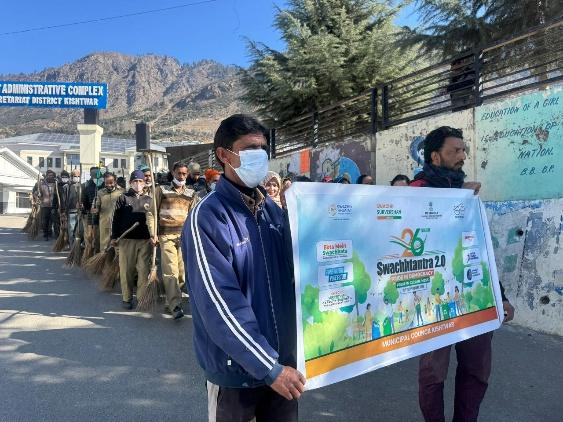
  • Municipal Council Kishtwar conducted a similar campaign alongside sanitation staff and Swachhta Executives. In addition to household visits, the council organized meetings with sanitation committees to discuss challenges and solutions. Garbage Vulnerable Points (GVPs) in the area were also cleared and flyers were distributed to reinforce the message.
  • Municipal Council Kathua also joined hands with the community to raise awareness on composting and proper waste disposal, aligning its drive with the broader theme of Har Shaniwar Swachhta Tyohaar.

Guardians of Public Spaces: GVP Clean-Ups and Drain De-Silting

One of the most striking features of this campaign has been the transformation of Garbage Vulnerable Points, previously ignored or misused, into cleaner and more functional public spaces.

  • In Sopore, a GVP was converted into a green zone marked for plantation activities under the Ek Ped Maa Ke Naam campaign, blending cleanliness with environmental restoration.
  • Reasi witnessed a successful GVP transformation drive near the Bus Stand in Ward No. 4, restoring hygiene and community pride.
  • In Bandipora, dedicated sanitation workers and volunteers cleaned the banks of Madhumati Nallah at Kaloosa, demonstrating both environmental stewardship and public involvement.
  • Malikpora saw the clearance of a major GVP and the de-silting of a choked drain near Shaheed Park. Debris was safely removed with the help of a hooper and transported to the designated dumping site.

Greener Cities: Plantation Drives Under ‘Ek Ped Maa Ke Naam’

Further amplifying the campaign’s ecological impact, several ULBs have integrated plantation drives into their weekly activities. By tying this effort with the emotive theme Ek Ped Maa Ke Naam, these councils are invoking personal responsibility and a culture of environmental care.

Spaces once overwhelmed by garbage are now being envisioned as future micro-forests and oxygen banks a fitting tribute to both nature and nurturing.

Breaking Free from Plastic: Enforcing the Ban on Single-Use Plastics

Taking bold steps toward sustainability, Municipal Council Udhampur cracked down on the use of single-use plastic within its jurisdiction. Shopkeepers using plastic bags were penalized and strong enforcement measures were put in place to ensure long-term compliance. The message is clear: clean cities cannot coexist with plastic pollution.

Collective Impact, Lasting Change

What sets Har Shaniwar Swachhta Tyohaar apart is its inclusive and recurring nature. By dedicating every Saturday to cleanliness and sustainability, the campaign is embedding sanitation consciousness into the weekly rhythm of urban life. Whether it’s educating door-to-door, reclaiming public spaces, planting trees, or enforcing green laws, every action counts because it’s not just about one day of Swachhta, but a culture of everyday Swachhta.

As these efforts continue to unfold across Jammu & Kashmir, it is evident that a cleaner, greener future is not only possible it is already underway.