It is one thing to sit in an air-conditioned room and talk about “source segregation” or “resource recovery.” It is quite another to stand on the floor of a Material Recovery Facility (MRF) and watch exactly what happens to a bag of garbage after it leaves a household kitchen. Recognizing that true behavioral change starts with seeing how the system actually works, Municipal Committee Khrew and Municipal Council Budgam recently took their field teams, local leaders, and volunteers out of the office and straight to the front lines of urban sanitation.
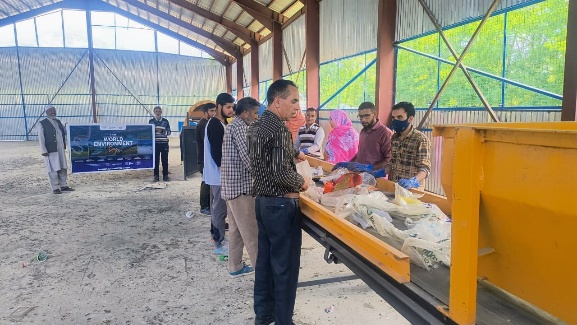
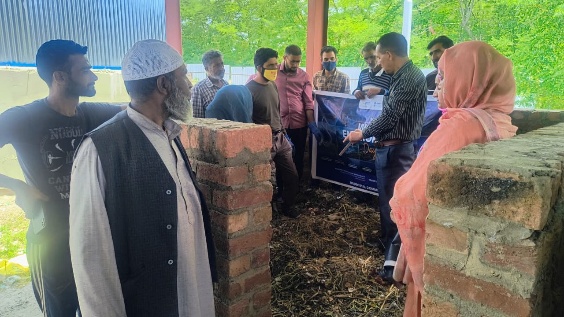
In Khrew, the morning began with a diverse group including former ward councillors, Swachhata Ambassadors, community mobilizers, and the hands-on sanitation staff gathering for a walking tour of the town’s integrated waste pipeline. They tracked the journey of local waste from the MRF Centre, through the Waste-to-Compost Plant, and finally to the local dumping site. Instead of a dry lecture, facility operators gave practical briefings at each stop. For the community mobilizers who knock on doors every day, watching the composting process firsthand made it clear why separating organic waste matters. They saw how clean, segregated waste seamlessly turns into rich compost, while mixed, unsegregated bags cause immediate bottlenecks and extra labor.
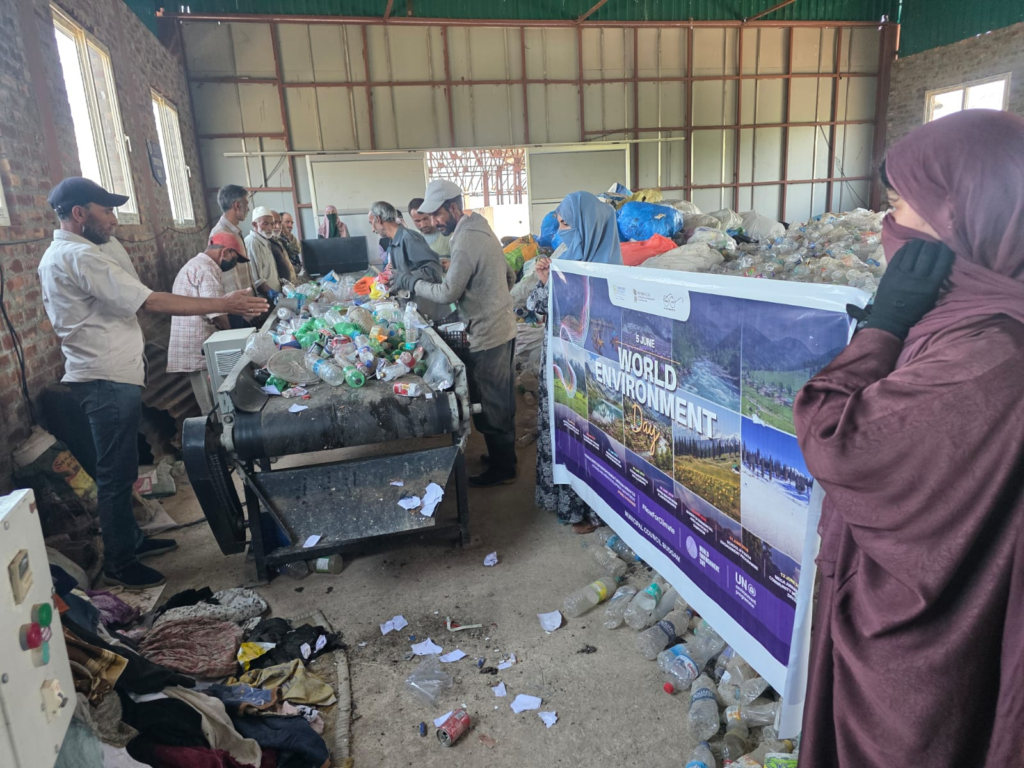
Over in Budgam, the energy was just as grounded. The council brought together a motivated group of volunteers, ward representatives, and local familiar faces, including Ex-President Mehraj-u-Din Dar, Brand Ambassador Aijaz Ahmad Khan, and Swachhata Champion SajadHussain Zawar. The local Swachhata Executive walked the group step-by-step through the sorting lines at the MRF, breaking down the mechanics of recycling and showing the real-world value of what most people consider useless trash. From there, the delegation moved to the Waste-to-Compost Facility to see how biodegradable waste is handled, and wrapped up at the local RRR Centre to look at ways everyday items can be reused and kept out of landfills entirely.
By the end of the day, these visits did something that no pamphlet or official notice could achieve: they built trust. The teams from both Khrew and Budgam didn’t just leave with technical knowledge; they left with a clear picture of the hard work that goes into keeping their towns running. Armed with this firsthand experience, these local leaders and mobilizers are heading back into their neighborhoods with the real stories and practical proof needed to get everyday citizens onboard with the 2026 waste management guidelines.
