
The success of any sweeping environmental policy doesn’t ultimately depend on the big speeches made in administrative halls; it relies entirely on the small choices made next to the kitchen counter. Across Municipal Council Reasi, a quiet but profound shift in daily routines took place during a week-long World Environment Day campaign from June 5th to June 12th, 2026. Neighbors talked to neighbors, and families rethought what they used to dismiss as mere garbage.
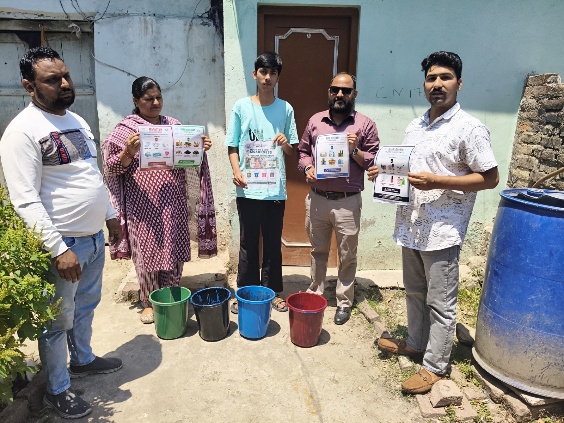
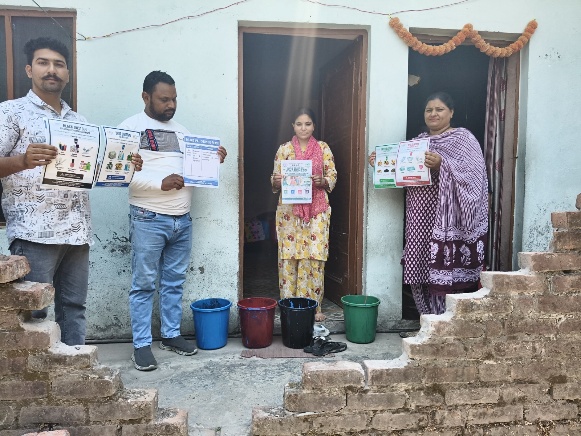
The transformation came alive when the local IEC Team teamed up with newly appointed Self-Help Group (SHG) Community Mobilizers to walk the streets of Wards 4, 5, 6, 7, and 8. Carrying practical demonstration kits, posters, and simple stickers, these field teams knocked on doors to introduce residents to the concept of mandatory four-stream segregation. Instead of just handing out flyers, the mobilizers spent time in residential courtyards showing exactly how to sort household waste into four distinct categories: wet, dry, domestic hazardous, and sanitary waste.
The response across neighborhoods like Shastri Nagar and Muslim Mohalla was deeply personal. Rather than viewing the new guidelines as an administrative chore, families enthusiastically adjusted their households to make room for the change. In kitchen after kitchen, residents set up dedicated segregation zones, voluntarily adopting a four-bin system to separate their daily waste right at the source.
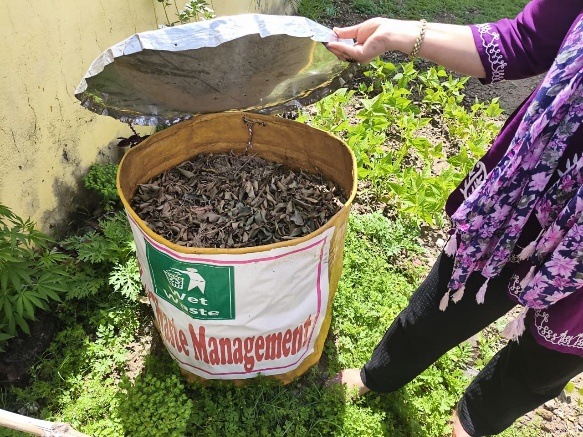
The conversations at the doorstep quickly evolved from basic sorting to long-term sustainability. In the same wards, the mobilization teams introduced the mechanics of home composting, demonstrating how everyday wet waste can be naturally broken down instead of being thrown into a single mixed bin. Inspired by the idea of a circular economy, several households immediately set up small composting areas in their backyards or balconies, transforming organic kitchen scraps into nutrient-rich soil for their plants.
By the end of the week, the campaign achieved something far more permanent than a temporary cleanup drive. By breaking down the barriers to four-stream segregation and home composting, Municipal Council Reasi managed to spark an authentic behavioral change. The effort proved that when citizens are given the right practical knowledge and a little encouragement, keeping a town clean stops being a government mandate and simply becomes a natural part of everyday life.
