
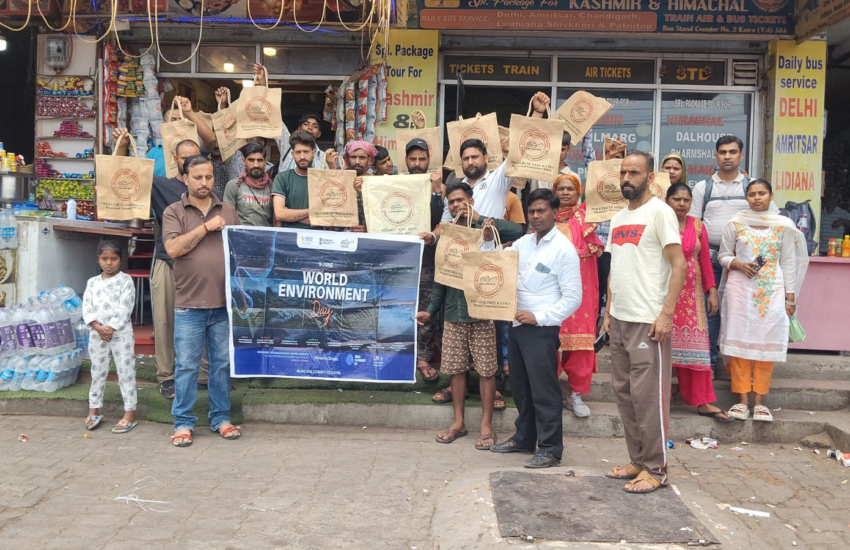
The true test of an environmental campaign is how well it works in the middle of a busy commercial market, where convenience usually beats compliance. To tackle the challenge of single-use plastic (SUP) head-on during the World Environment Day 2026 campaign, the Municipal Committees of Katra and Akhnoor took a direct, practical approach. Instead of just issuing warnings, field teams walked through local stalls and storefronts, offering shopkeepers tangible, eco-friendly alternatives to help them break the plastic habit.
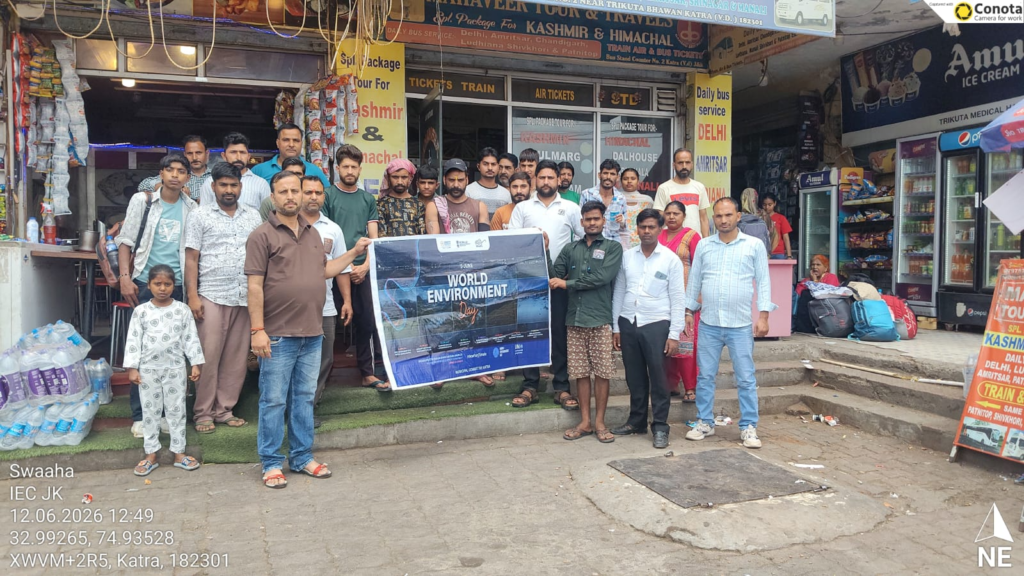
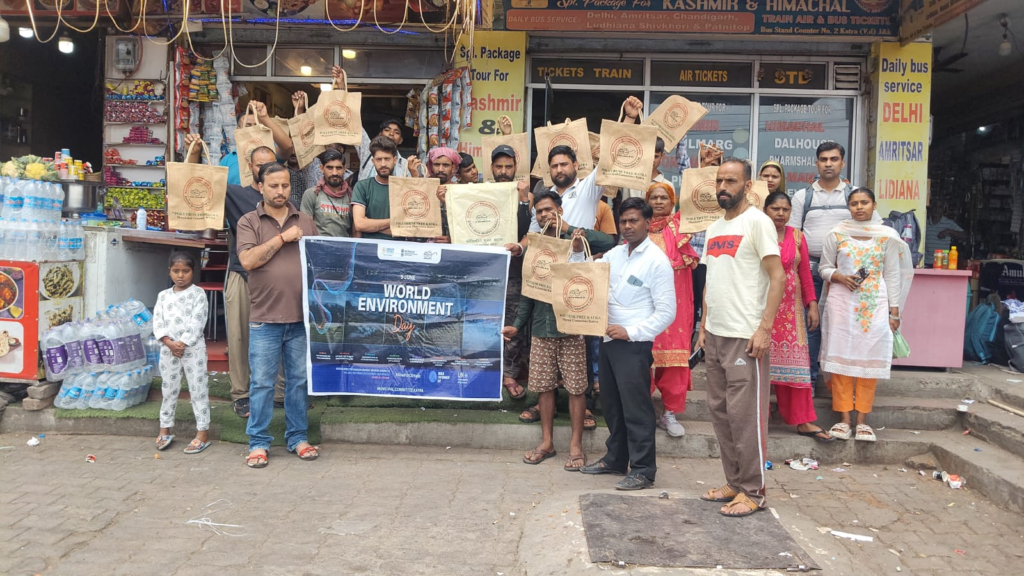


In the high-footfall tourist hub of Katra, the drive centered around Ward No. 5, near Counter No. 2. A dedicated team of field workers and community mobilizers engaged directly with local businesses, drawing an active group of 50 to 60 shopkeepers and street vendors. The team spent time discussing the environmental impact of thin plastic bags and the long-term benefits of shifting to reusable materials. To give businesses a head start, the municipal committee distributed 100 durable jute bags directly to the vendors, ensuring they had immediate alternatives to offer their customers.
Meanwhile, a similar transition took place at Municipal Committee Akhnoor, focusing on the busy commercial stretch of Ward No. 10 around the Main Market Bus Stand. Understanding that transport hubs are major sources of plastic waste, community mobilizers and urban local body officials fanned out across the market. They distributed 30 jute bags to vendors and small business owners while holding one-on-one conversations about the ban on single-use plastics. The team highlighted how switching to reusable bags protects the local environment and helps businesses comply with the updated 2026 sanitation guidelines.
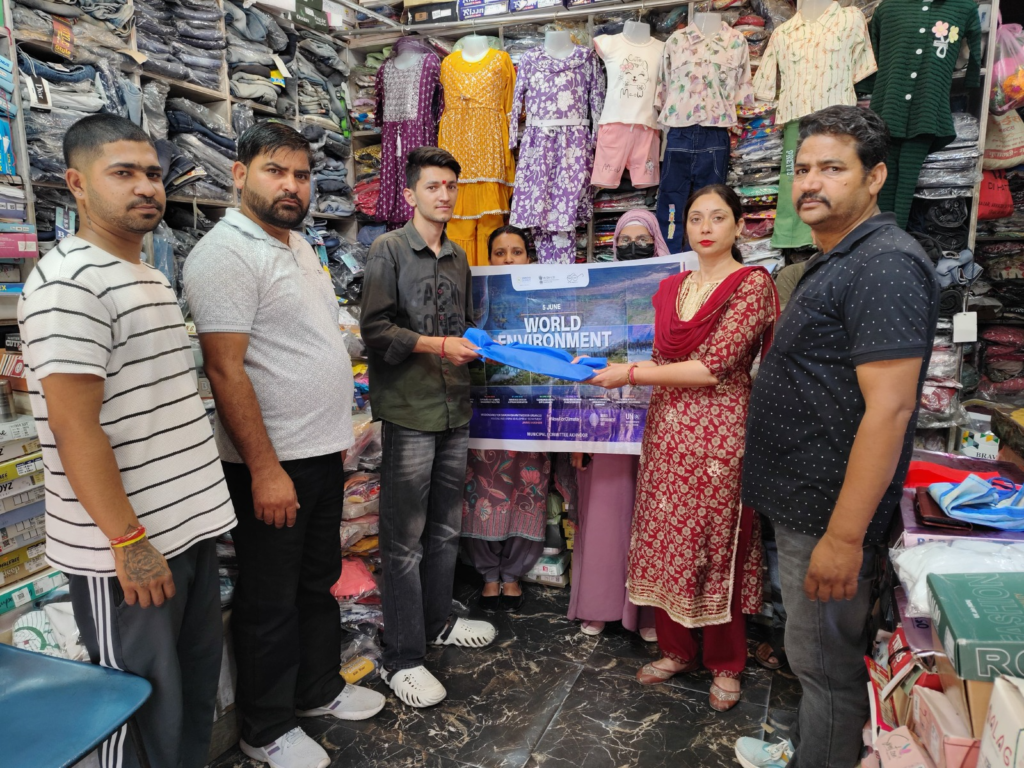
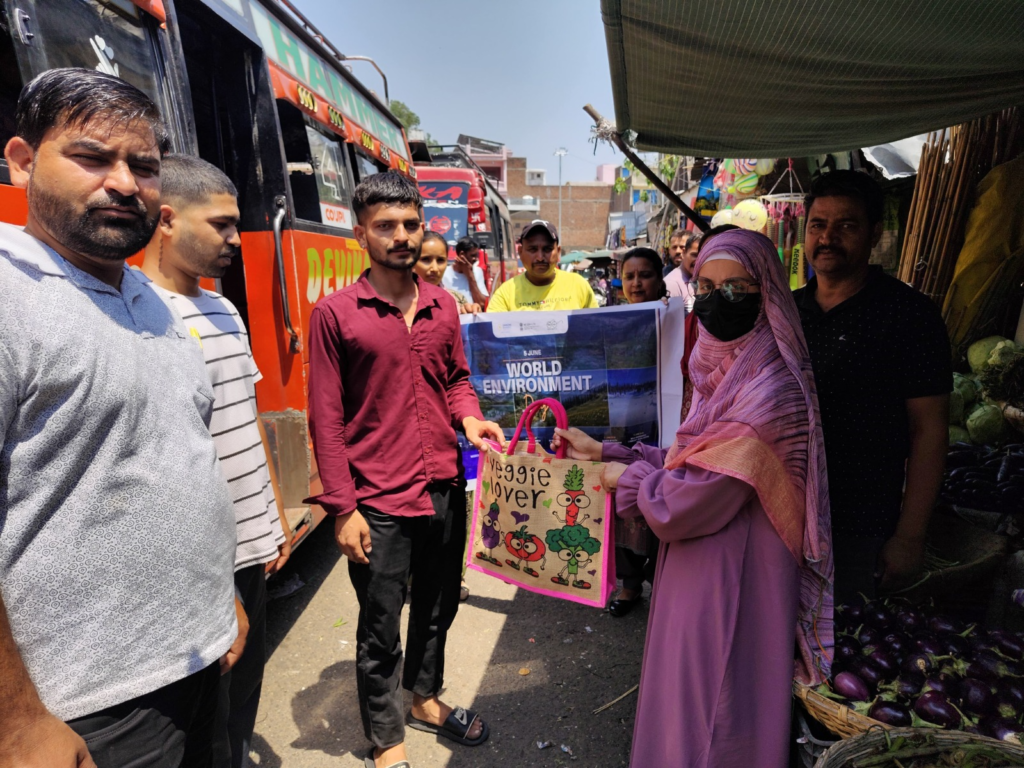
By putting sustainable alternatives directly into the hands of market stakeholders, both Katraand Akhnoor proved that behavioral change is possible when vendors are supported rather than just penalized. These drives successfully turned busy commercial spaces into platforms for collective action, showing that a clean, plastic-free market relies on steady community engagement and practical solutions.
