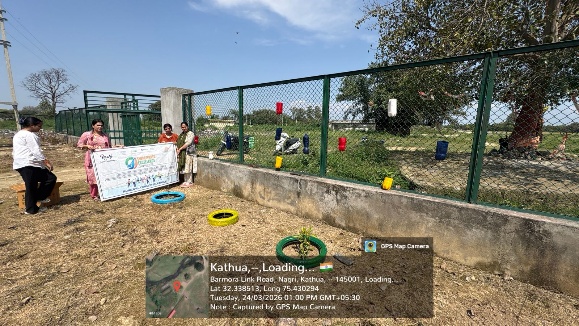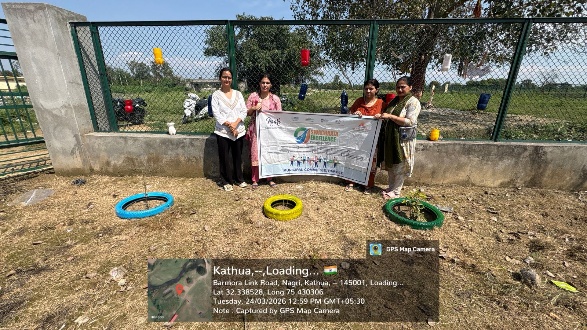
The landscape near the Material Recovery Facility (MRF) in Parole, Kathua, has undergone a remarkable transformation, evolving from a functional waste handling site into an inspiring public space. This second “Waste to Wonder” park serves as a living example of the circular economy in action, proving that with creative vision, discarded materials can be given a second life as meaningful community assets. This project was a key intervention under the Swachhata Excellence Campaign 2026, aimed at promoting innovation and public awareness regarding sustainable waste management.
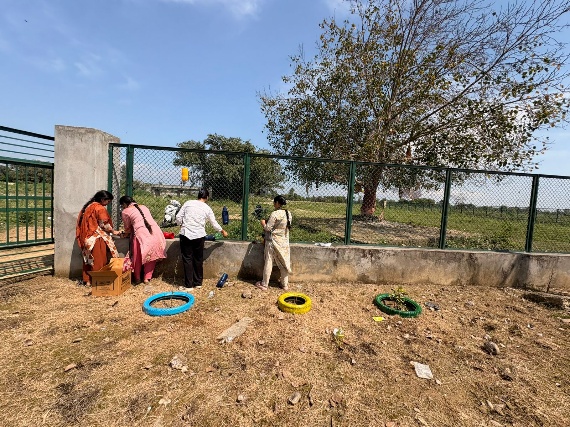
The development of the park was a collaborative effort involving the Municipal Committee Parole, dedicated community mobilizers, and local residents who turned their hands to upcycling. Together, they repurposed a wide variety of scrap, including old tyres, plastic bottles, discarded metal, and wooden waste. What was once considered junk has been skillfully crafted into colorful benches, artistic planters, and decorative garden installations that have completely changed the aesthetic of the area. This initiative follows the population-based criteria set in the official action plan to ensure that public spaces across all urban local bodies are enhanced with these eco-friendly sculptures.
Beyond the physical structures, the true success of the park lies in the community participation it has sparked. Community mobilizers played a vital role in coordinating the project, using the activity as a hands-on Information, Education, and Communication (IEC) tool. By involving citizens in the actual creation of the park, the initiative has fostered a deep sense of ownership and responsibility toward the environment. This grassroots engagement is essential for the long-term goal of achieving a garbage-free city, as it shifts the public’s perception of waste from a burden to a resource.
The MRF Waste to Wonder Park stands as a symbol of what can be achieved when municipal planning meets local creativity. It not only provides a beautiful space for the residents of Kathua but also serves as an educational hub that demonstrates the practical application of the “Reduce, Reuse, and Recycle” principle. As part of the Road to Swachh Survekshan2025-26, this success story highlights the commitment of the Jammu and Kashmir urban local bodies to building climate-resilient and environmentally sustainable cities.