The road to Swachh Survekshan 2025-26 is not just about cleaning streets; it is about changing minds. Today, the combined efforts of Municipal Council Baramulla and Municipal Committee Watergam proved that when local administration engages directly with its people, the results go beyond simple sanitation they build a foundation for a healthier future.
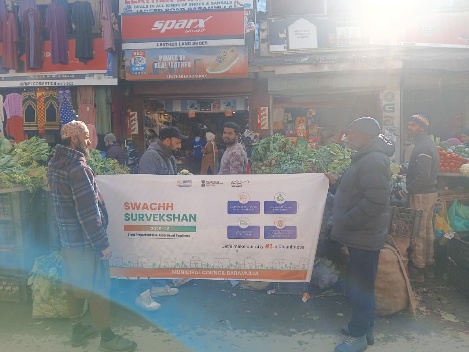
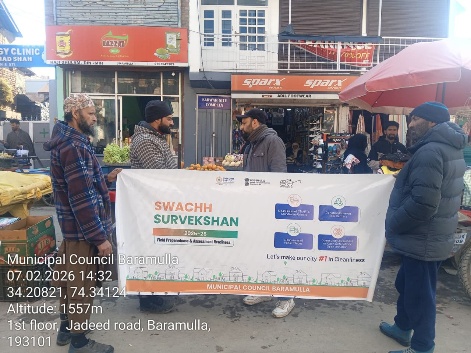
In the busy commercial hubs of Baramulla, the day began with a shift in strategy. Rather than just distributing pamphlets, the Municipal Council sat down with shopkeepers and residents to discuss the direct impact of sanitation on public health. By focusing on ending open defecation and urination, the council successfully turned a government campaign into a community priority. Shopkeepers, who serve as the face of the local market, have now committed to becoming guardians of cleanliness, ensuring their storefronts and surroundings remain hygienic for every customer.
Meanwhile, in Watergam, the focus was on high-traffic areas that often face the most pressure: the Sumo Stand and Bus Adda in Ward No. 01. Recognizing that these hubs are the first point of contact for visitors, the Municipal Committee conducted an intensive cleaning drive. Teams didn’t just remove surface waste; they implemented sanitation measures to prevent future dumping, significantly improving the safety and visibility of these areas. This effort has not only brightened the ward but has also boosted the morale of local transporters and commuters.
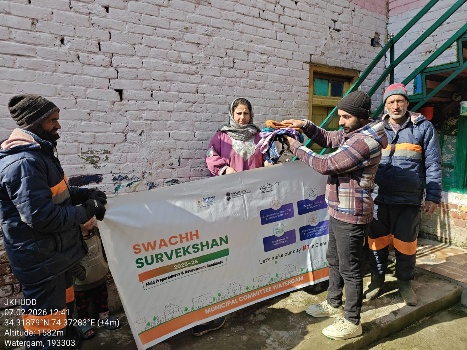
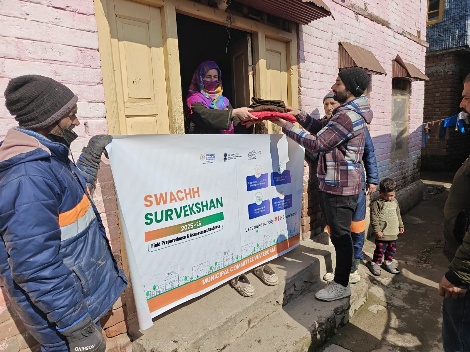
The most heartening feedback came from Ward No. 02, Dangerpora B, where residents met with officials to discuss sustained ODF (Open Defecation Free) behaviors. The inhabitants expressed strong support for the initiative, pledging to guide others toward using Community and Public Toilets (CT/PT). This positive feedback loop shows that the message of dignity and health is resonating at the grassroots level. To round out the day, Watergam’s RRR (Reduce, Reuse, Recycle) Center became a hub of activity. Citizens were encouraged to donate usable items, bridging the gap between waste management and social welfare. By promoting resource recovery, the drive ensures that items that might have been discarded are instead diverted to needy members of the community, proving that a cleaner city is also a more compassionate one.
Through these diverse activities ranging from intensive cleaning to heart-to-heart community meetings Baramulla and Watergam are demonstrating that Swachh Survekshan 2025-26 is a shared journey toward a more sustainable and hygienic Jammu & Kashmir.