
Sunday, November 16th, arrived with the crisp, almost tender chill that autumn brings to Srinagar, long after the chinar leaves have turned scarlet and gold. It was exactly the kind of quiet afternoon that often invites neighbors to pause their weekly routines, but today, the residents of Cooperative Colony, Pirbagh, weren’t gathering for idle chatter. They had come for a purpose a community meeting organized under the banner of the Green Colony Initiative, an effort driven by the Municipal Corporation in collaboration with Swaaha’s initiative.
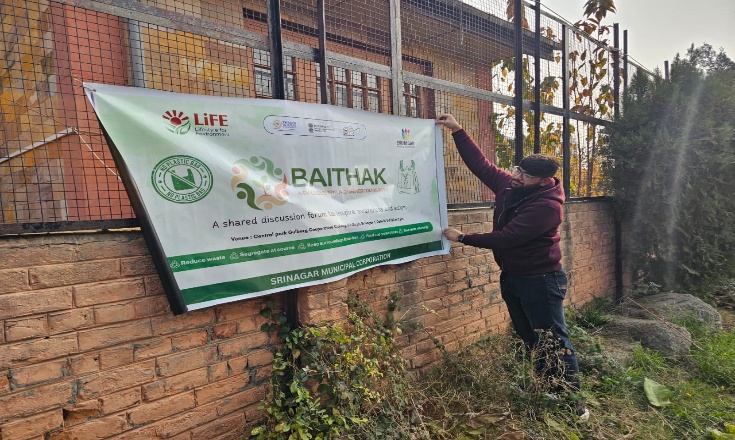
The session was aptly named “Baithak – A Dialogue for a Greener Tomorrow.” Instead of a formal lecture, the atmosphere felt more like a sincere discussion among family, with a shared concern etched on everyone’s faces: how to truly care for the beautiful place they called home.
The conversation was steered by a resource person, whose passion for environmental stewardship was immediately evident. The program, which mirrored successful efforts like the one in Sainik Colony, Jammu, aimed to foster community engagement right here in the Kashmir division. The discussion leader didn’t start with complicated charts or overwhelming statistics; he started with the basics: what do we do when we throw something away?
The heart of the session quickly focused on waste management. As the principles of green habits were discussed, the residents, many of them lifelong neighbors, didn’t hold back. They actively shared the frustrating reality of their lanes the challenges of ensuring that waste collectors adhered to schedules, the difficulty in keeping plastics out of the open drains, and the struggle to teach children the difference between what’s truly dry and what’s wet.
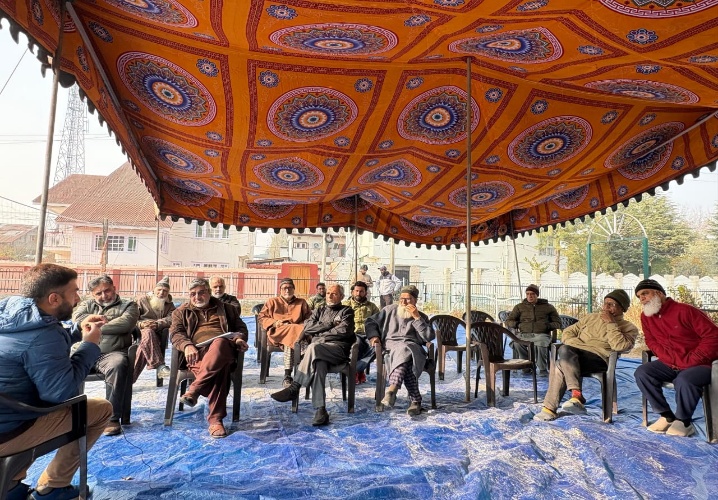
One elderly resident, leaning forward, recalled how clean the colony was decades ago, before the sheer volume of packaged goods changed everything. Another younger participant shared her personal idea for a neighborhood composting project. It was this back-and-forth, this honest sharing of perspectives and practical challenges, that defined the Baithak.
The resource person listened patiently, nodding frequently. The discussion consistently brought the focus back to one fundamental truth, which the Municipal Corporation and Swaaha’s initiative championed: behavioral change is the seed of all success. “We can buy the best bins and hire the best sanitation workers,” he said, “but if the habits inside our four walls don’t change, the streets outside never will.”
The Green Colony Initiative emphasized the powerful nature of collective action. By citing the positive transformation seen in similar efforts, the program highlighted the broader vision: transforming Pirbagh into a model of environmental consciousness through community-led efforts.
As the soft November light began to fade, the meeting concluded not with a list of tasks, but with a renewed sense of shared responsibility. Every resident left the Baithak feeling less like they’d attended a formal session, and more like they had committed to a genuine pact a promise to their neighborhood and to themselves to make Cooperative Colony, Pirbagh, a truly green home for tomorrow.
