by swachhjk November 28, 2025

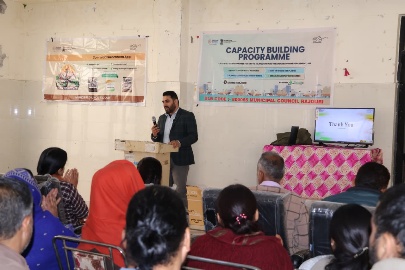
In a decisive move toward a cleaner, greener future, the Municipal Council Rajouri has successfully completed a pivotal capacity-building program aimed at bolstering solid waste management (SWM) practices across the district. Far from being a mere procedural exercise, this interactive session, organized in partnership with Swaaha Resource Management Pvt. Ltd., has sparked a renewed commitment and equipped local stakeholders with the knowledge to execute a comprehensive SWM strategy.

The program, held on Tuesday, brought together a diverse group of key players, including the CEO of the Municipal Council, Accounts Officer Priksha Sharma, former councillors, social activists and representatives from the Traders Federation Rajouri. The presence of Door-to-Door Waste Collection Drivers from the three Urban Local Bodies Rajouri, Thanamandi and Kalakote underscored the holistic, ground-up approach of the initiative.

Insights for Lasting Change

The heart of the success lay in the technical session led by Tabraiz Madani, Capacity Building Expert from Swaaha Resource Management Pvt. Ltd. Madani delivered invaluable insights into modern waste management systems. The focus was sharp and practical, centered on critical components necessary for effective waste governance:

  • Source Segregation: Emphasizing the fundamental step of separating waste at the household level.
  • Door-to-Door Collection: Streamlining the logistics for efficient and complete pickup.
  • Strict Implementation of Single-Use Plastic (SUP) Ban: Tackling one of the biggest environmental challenges head-on.
  • Promotion of RRR Principles: Championing Reduce, Reuse, Recycle as a core community mindset.

A critical takeaway highlighted was the indispensable role of community involvement in ensuring long-term cleanliness and sanitation outcomes.

The session was not a one-way lecture; it was an open forum. Presided over by Yousuful Umar, the technical discussion was followed by an interactive session where participants, including Sanitary Inspectors, Taxation Staff and Data Entry Operators, contributed practical suggestions derived from their on-the-ground experience. This vibrant exchange ensured that the resulting strategy is not just theoretical but deeply rooted in local realities.

The program concluded on a constructive and resolute note, with all stakeholders reiterating their commitment to fully supporting the Municipal Council Rajouri’s vision of a clean, green and healthy Rajouri Town. This capacity-building program marks a successful first step a foundation built on partnership, education and shared responsibility that promises to transform Rajouri’s approach to environmental sustainability.

by swachhjk November 25, 2025

In the picturesque landscape of Jammu and Kashmir, a quiet but powerful revolution is unfolding, driven by the belief that true progress begins with a clean environment. As part of the ongoing Green Campus Initiative under the Swachh Bharat Mission–Urban (SBM-U), this movement is successfully transforming educational institutions and government offices into models of environmental sustainability. It’s not just about compliance; it’s about a profound shift in mindset.

The story really took off when the Information, Education, and Communication (IEC) teams, including the dedicated Swaaha unit of the Jammu Municipal Corporation (JMC), began their comprehensive campus visits. They weren’t just checking boxes; they were partnering with institutions. Schools like K.C. International, B.Ed College, J.K. Public School (Panjthirthi), and Lawrence Public School were among the first to welcome the team, eager to be assessed against the rigorous six-point criteria for a truly sustainable campus.

From Classrooms to Composting: The Six Pillars of Green

The JMC’s evaluation parameters quickly became the blueprint for excellence. Success wasn’t measured by intent, but by action, particularly in areas like:

  • Solid Waste Management: Checking for color-coded bins, perfect source segregation, and genuine enthusiasm for composting and recycling.
  • Energy Efficiency: Confirming the switch to LED lighting and discussing the potential for solar energy adoption.
  • Greenery and Plantation: Appreciating the commitment to maintaining beautiful, thriving green spaces, herbal gardens and student-led plantation drives that instill ownership.

What made these visits a success wasn’t the assessment itself, but the immediate, proactive response from the institutions. Teachers and students alike demonstrated that they were already pioneers, organizing regular cleanliness drives, ensuring hygienic washrooms and banning single-use plastic, setting a powerful example for the wider community.

Building Capacity, North to South

The initiative’s momentum wasn’t confined to Jammu. The drive quickly expanded across the region, demonstrating a unified commitment to a greener future.

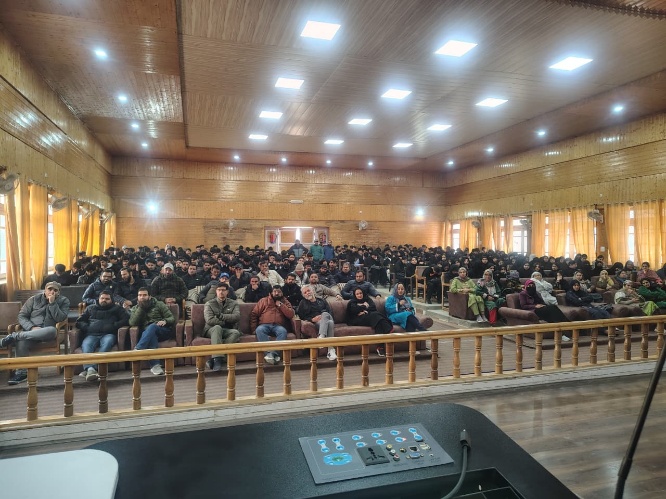
In Srinagar, the Municipal Corporation (SMC) hosted a crucial capacity-building session at Kashmir Government Polytechnic College. Led by experts like Mr. Tabraiz Madani, and attended by senior officials and enthusiastic students, the session provided technical know-how for scientific waste management, waste segregation, and achieving official Green Campus certification. It was an investment in the future, empowering young minds to become environmental leaders.

Meanwhile, grassroots training was reaching essential local government offices and schools in Kathua, including Learning Temple High School and Sacred Heart High School. The focus here was hands-on: educating students on the vital difference between biodegradable and non-biodegradable waste, effectively building a new generation of environmental stewards. Further north in Kupwara, the Municipal Council collaborated with Krishi Vigyan Kendra to hold specialized awareness programs, moving beyond basic segregation to the advanced topic of home and vermicomposting—a perfect example of local experts supporting sustainable living.

A Lasting Legacy

Beyond the academic campuses, the initiative is leaving a visible mark on the public infrastructure. The comprehensive survey of all Community and Public Toilets (CTs/PTs) ensures that basic hygiene standards are met everywhere, supporting the overall cleanliness mission.

Perhaps the most visible sign of this success is the “Waste to Wonder” park developed at Children’s Park in Lakhanpur. This vibrant space is a physical testament to the mission’s core value: that waste is not an end, but a resource. By creatively reusing materials, it serves as an inspiring educational spot for families and children, proving that sustainability can be fun and beautiful.

The Swaaha–IEC teams have consistently concluded their visits by genuinely appreciating these efforts. Their message is clear: the dedication shown by every principal, teacher, student, and official across Jammu and Kashmir is driving real change. The JMC and SMC are committed to providing continued support and technical guidance, ensuring that the Green Campus Initiative evolves into a lasting legacy—a region defined by its natural beauty and its commitment to keeping it that way. The success of a cleaner, greener Jammu and Kashmir is now officially a shared achievement.