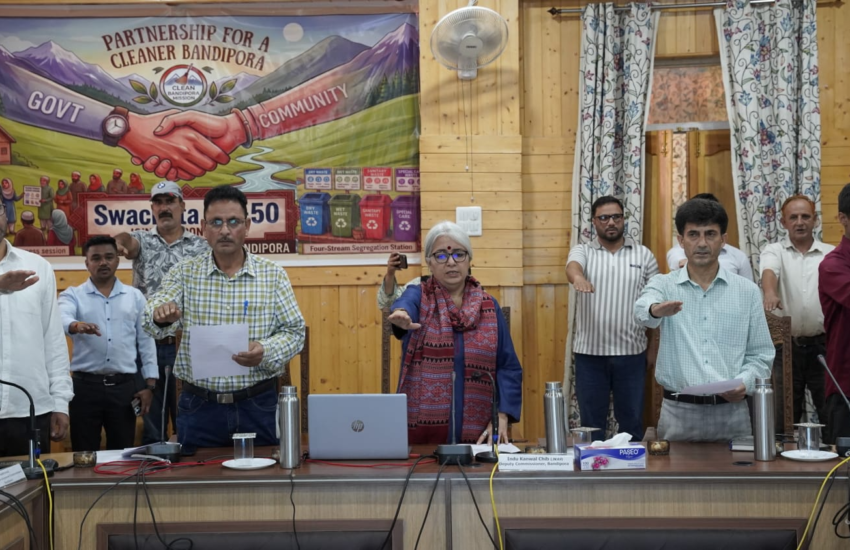
Yesterday, a major milestone was achieved in Bandipora’s journey toward sustainable waste management. At a district-level convention held in the Mini Secretariat’s Conference Hall, the District Administration officially launched the “Swachhta 50-50” initiative under the Swachh Bharat Mission. Built on the core principle of combining fifty percent government action with fifty percent active public participation, the campaign establishes a collaborative framework for effective and long-term solid waste management across the entire district.
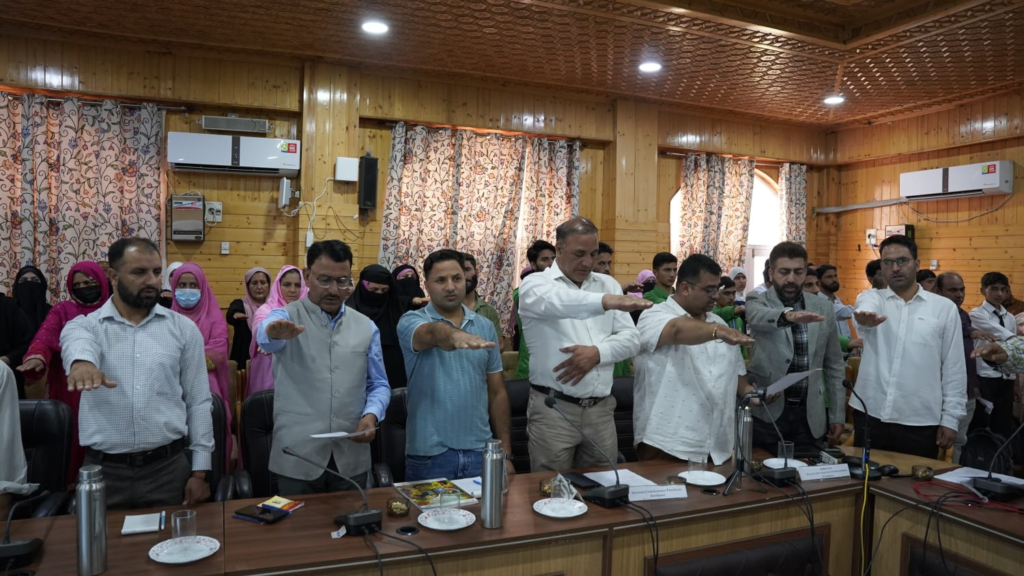
The convention was chaired by Deputy Commissioner Bandipora, Indu Kanwal Chib, alongside key administrative officials including Additional District Development Commissioner Nazir Ahmad Mir, PO ICDS Yaar Ali Khan, ACP Aijaz Ahmad, Chief Education Officer Bandipora, District Information Officer, and Block Development Officers. The proceedings commenced with the National Anthem, followed by the Swachhta Pledge administered by students from Government Higher Secondary School Quilmuqam.
Addressing the gathering, the Deputy Commissioner highlighted that Swachhta 50-50 is fundamentally a people’s movement built on shared responsibility, emphasizing that meaningful environmental transformation can only happen when every citizen takes active ownership. To back this vision with structured action, the administration announced a major push regarding Bulk Waste Generators across the district. Eighty-nine identified Bulk Waste Generators, who account for a significant share of overall waste, will be given a one-month handholding period, after which they will be required to scientifically manage their waste on-site in compliance with Solid Waste Management Rules while receiving continuous technical guidance from district officials.
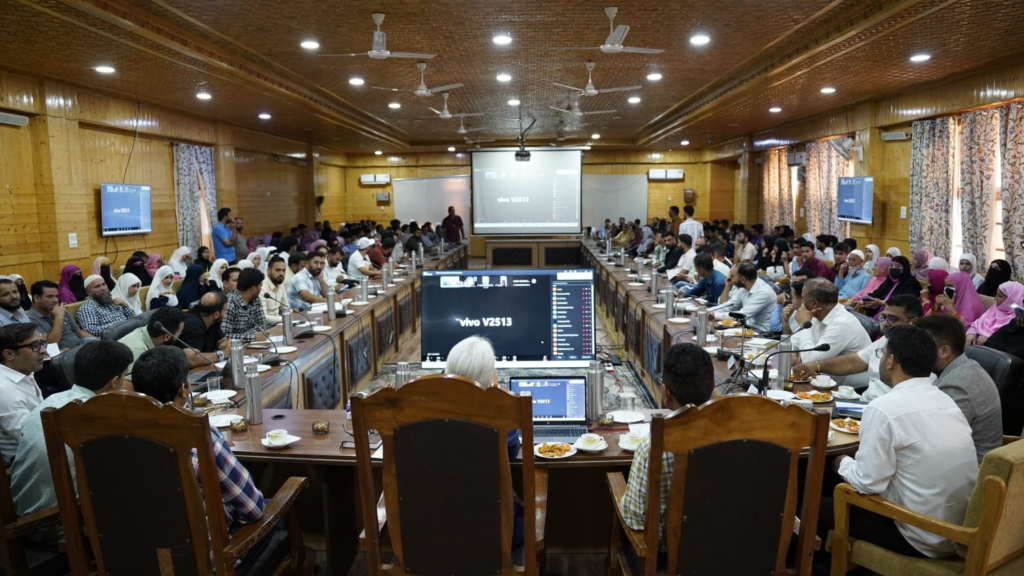
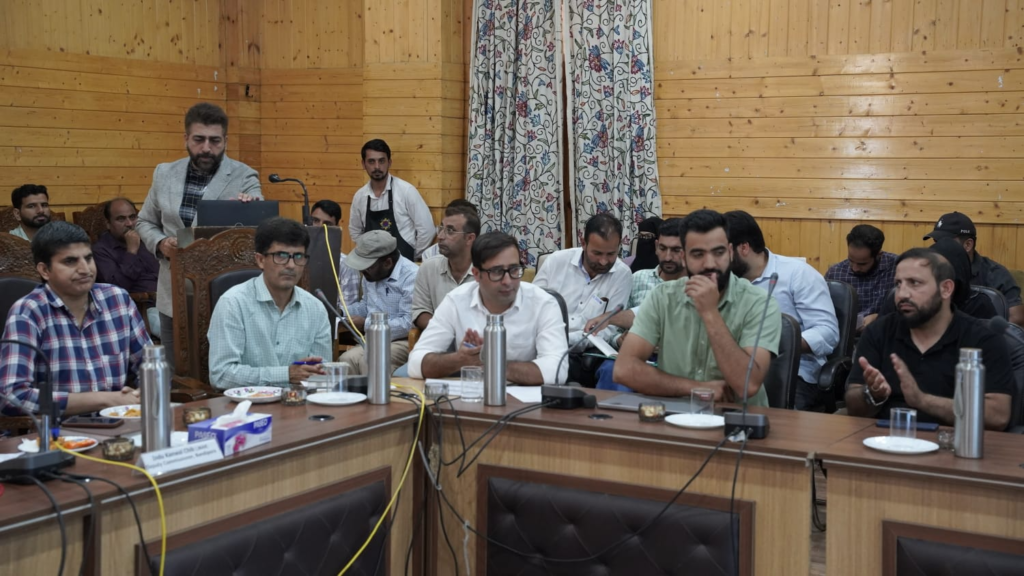
The convention also highlighted the role of Extended Producer Responsibility, noting the successful trial in Gurez where eleven companies participated and three accepted concrete proposals for waste handling. The administration reiterated that the ultimate responsibility for collecting and disposing of single-use plastics rests directly with the producers under the Extended Producer Responsibility framework.
To track implementation and maintain complete transparency, the dedicated Swachhta 50-50 digital platform was demonstrated by Dr. Saptak Rarotra from SWAAHA Resources Management. The digital system integrates household mapping, baseline survey tracking, allocation management, and QR code monitoring to keep real-time oversight of waste management practices ground-wide.
Mobilizing institutions forms a major pillar of the execution strategy. Every school and Anganwadi Centre will adopt fifty households on a long-term basis. Students will act as young ambassadors to sensitize their families, while teachers will certify the installation of dual dustbins at home. Highlighted during the session by PO ICDS Yaar Ali Khan, the “Kabaad se Jugaad” initiative running in Anganwadi Centres was commended as an effective model for turning waste into functional resources.
On an individual household level, the initiative centers on four key practices: installing separate dustbins for source segregation, practicing home composting for organic wet waste, ensuring timely payment of waste collection user fees, and switching to cloth bags to eliminate single-use plastics. Technical sessions during the convention further detailed waste processing methods, including wet waste composting, Aerobin technology, and sanitary waste disposal.
An interactive session allowed local students to express their concerns directly to leadership regarding the impact of unmanaged waste on agricultural soil fertility, receiving practical guidance on scientific disposal methods. Concluding the event, the Deputy Commissioner called upon every resident to begin the campaign from their own home, confirming that starting Monday, active awareness drives will begin in schools and markets to engage shopkeepers and residents alike.
