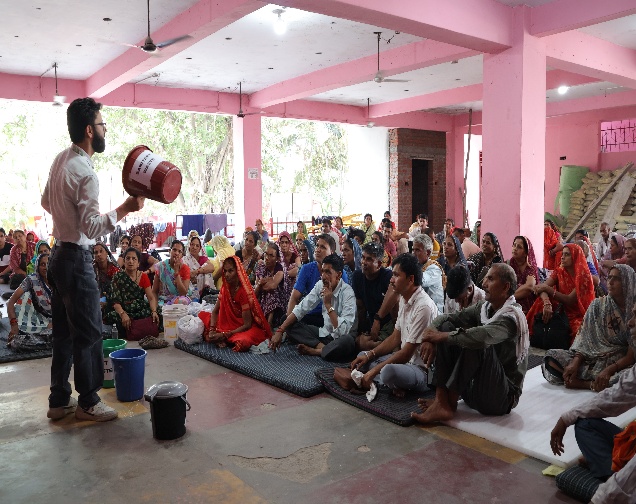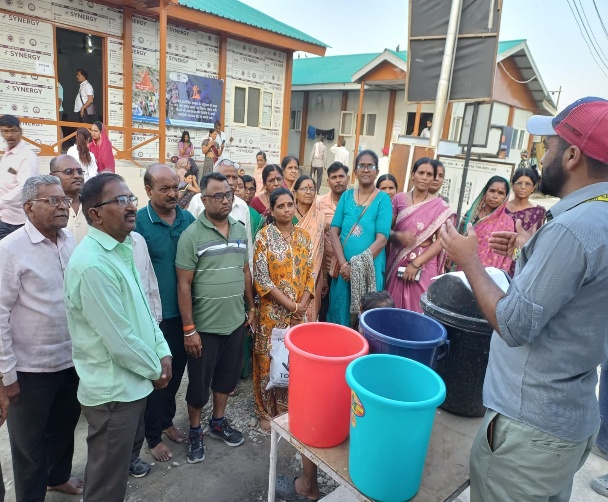
Live Demonstration of the Four Bin Segregation System for Yatris
Managing the solid waste generated across the extensive pilgrimage infrastructure requires a high degree of disciplined operational coordination on the ground. Under the overall guidance of the Jammu and Kashmir Housing and Urban Development Department, the administration deployed special Information, Education, and Communication teams to turn source segregation into a practical civic habit. These live educational sessions were heavily concentrated at high-volume transit checkpoints, specifically at the prominent BhagwatiNagar Yatri Niwas managed by the Jammu Municipal Corporation and the Pantha ChowkYatri Niwas overseen by the Srinagar Municipal Corporation.
During these field demonstrations, municipal teams and local volunteers engaged directly with arriving pilgrims, transit camp sanitation staff, and Langar organizers to create widespread awareness. Instead of relying on passive signage, the teams used an interactive placard game to explain the exact operational purpose of the newly deployed color-coded waste systems mandated under the Solid Waste Management rules. Participants learned to properly differentiate between the four distinct streams by placing mock placards into the respective bins. They were taught that green bins are strictly reserved for organic wet waste and kitchen scraps, while blue bins are dedicated to capturing dry recyclables like plastic wrap, cardboard, and paper packaging. To maintain strict field hygiene, red bins were designated exclusively for sanitary and medical waste, while black bins were assigned for domestic hazardous and special care materials to prevent dangerous cross-contamination.
The operational impact of this initiative was felt across the entire transit network, extending down to the localized camp infrastructures managed by the Anantnag and Ganderbal urban local bodies. By successfully demonstrating the four-bin system to thousands of pilgrims at these major base facilities from the very beginning of the season, the campaign completely transformed how waste was handled at the source. This hands-on educational groundwork significantly improved the accuracy of the sorting process across the 1,320 newly installed dustbins, making downstream handling much safer and faster for the 554 Safai Mitras who collect the sorted streams twice every day.