The Gamification of Cleanliness: How Rapid-Fire Education Transformed Waste Segregation Across Transit Hubs
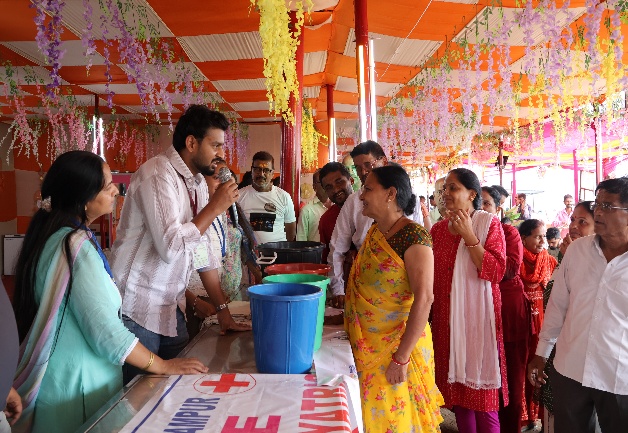
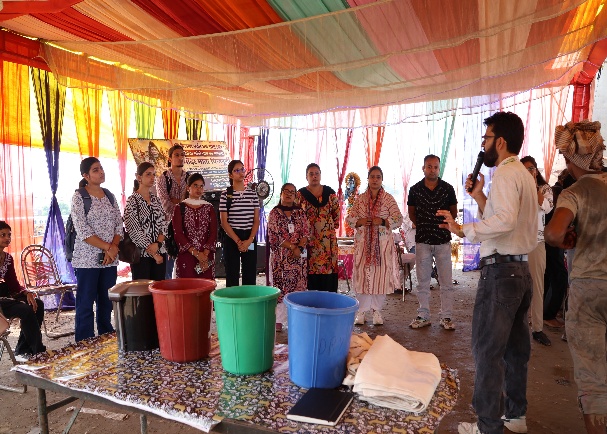
At the busy urban lodgement centres, managing the waste generated by a massive influx of travelers requires active cooperation from the public. To directly address this challenge, the “Know Your Bin” Quiz was introduced at the Information, Education, and Communication (IEC) kiosks as a direct educational tool to combat mixed waste dumping and improve source segregation. This initiative uses interactive, rapid-fire questioning to test and educate transit camp visitors on the exact purpose of the color-coded waste systems deployed along the route.
The scale of this operation is concentrated within major urban gateways, primarily driven by the Jammu Municipal Corporation (JMC) and the Srinagar Municipal Corporation (SMC), alongside key Urban Local Bodies (ULBs) managing transit camps. Across these specific locations, the camp infrastructure handles a massive daily volume of 25.5 metric tonnes of waste generated on average. This daily total breaks down into 18.7 metric tonnes of wet waste, 9.1 metric tonnes of dry waste, 0.158 metric tonnes of sanitary waste, and 0.051 metric tonnes of special care waste. By teaching pilgrims to instantly identify the correct bins for these specific waste streams, the quiz serves as an essential field training measure, turning standard civic rules into a memorable exercise that ensures participants retain the information when navigating the active transit corridors.
The tangible impact of this educational groundwork is measured directly on the field by the improved accuracy of the waste stream management. The campaign actively prepares the covered footfall of 2,62,335 pilgrims including the 75,000 pilgrims who passed directly through these urban lodgement centres to correctly utilize the 1,320 dustbins installed across the transit infrastructure. When pilgrims learn to differentiate between dry, wet, sanitary, and special care streams under pressure, the accuracy of institutional source sorting improves dramatically. This reduces the incidence of mixed-waste cross-contamination, making downstream processing much faster and more effective for the 554 Safai Mitras who collect the segregated waste twice daily. Ultimately, by transforming a mundane municipal rule into an engaging, memory-retention game, the quiz ensures that clean trails do not begin at the sorting facilities, but rather with an informed choice made right at the point of disposal.