Unburdening the Peaks: How Regional Municipalities are Intercepting Plastic at the Gateway
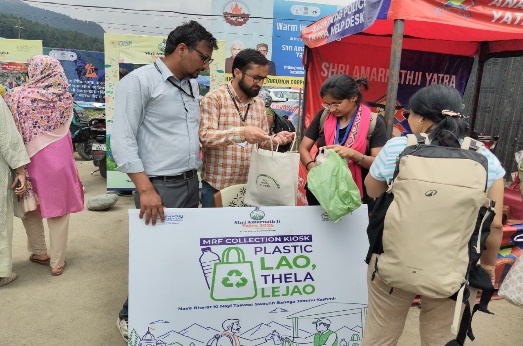
The high-altitude ecology along the Shri Amarnath Ji Yatra route faces a constant threat from non-biodegradable waste left behind by massive crowds. To directly address this environmental vulnerability, the administration established a structural swap initiative at the Information, Education, and Communication (IEC) kiosks known as the “Plastic Lao, ThailaLe Jao” Campaign. Under this framework, arriving pilgrims are systematically intercepted at key entry points and encouraged to deposit single-use plastic items directly at the kiosks before ascending further into the mountain trails.
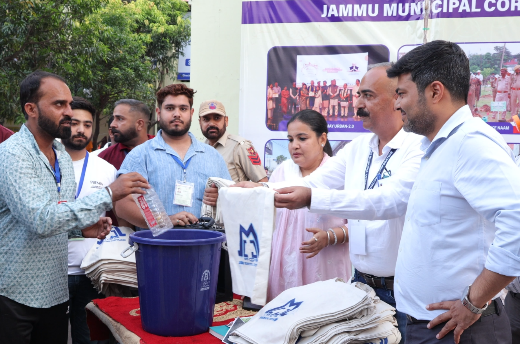
Rather than relying on broad regional directives, the physical distribution of eco-friendly alternatives has been strategically localized at key municipal gateways and vital transit base camps. Within the Jammu Municipal Corporation (JMC) limits, which serves as the primary entry point for pilgrims arriving from across the country, field volunteers successfully distributed over 10,000 jute and cloth bags to incoming travelers. Further along the transit route, within the Srinagar Municipal Corporation (SMC) limits, municipal teams and local volunteers distributed approximately 5,000 bags directly to yatris. This targeted distribution has been heavily concentrated at major base camps including the transit hubs of Baltal and Nunwan (Pahalgam) while smaller Urban Local Bodies (ULBs) operating along the lodgement and transit corridors have systematically distributed the remaining balance of the more than 10,000 total bags procured for the Yatra.
The immediate ecological impact of this coordinated intervention is clearly visible on the field. Supported by dedicated teams of local volunteers stationed at each municipal kiosk, this logistical swap ensures that high-density plastic items are captured at the base level rather than being scattered across the mountain passes where high-altitude collection is incredibly difficult. By replacing single-use plastics with reusable materials at the very beginning of the journey, the campaign has successfully prevented an estimated several thousand plastic bottles and wrappers from entering the vulnerable local ecosystem. The collected plastic waste is systematically bundled and routed into certified recycling channels, ensuring that the heavy flow of pilgrims leaves behind a clean trail and protects the region’s water bodies and wildlife from long-term degradation.