
The air across Jammu and Kashmir carries a unique blend of divine chanting, cool mountain winds, and a profound sense of shared purpose. When the Shri Amarnath Ji Yatra officially commenced on July 4, 2026, it marked the beginning of not just an arduous spiritual pilgrimage, but a historic milestone in environmental stewardship. As thousands of devotees steadily make their way toward the holy cave, the journey has seamlessly transformed into a vibrant movement for Swachhata. Far from the heavy, unmanaged footprints of traditional massive gatherings, this year’s Yatra stands as a beautiful testament to how deep faith and rigorous ecological responsibility can walk hand in hand.
Behind this massive green transformation is a finely tuned symphony of administrative dedication led by the Housing and Urban Development Department (H&UDD), in close coordination with the Jammu Municipal Corporation (JMC), the Directorate of Urban Local Bodies (ULBs), and various sibling government departments. From the entry point at Lakhanpur and Kathua, moving upward through Samba, Bari Brahmana, Jammu, Udhampur, Ramban, and Banihal, right up to the base camps in Anantnag, Mattan, Pahalgam and Ganderbal’s Baltal axis, the route has been closely managed to ensure zero environmental degradation. Working tirelessly alongside them is the creative energy of the Swachh IEC Team, converting strict regulations into a joyous, community-driven celebration of nature.
The foundations for this pristine trail were quietly laid long before the first batch of pilgrims arrived. Recognizing that true sanitation begins with preparation, the H&UDD organized extensive orientation and capacity-building workshops prior to the Yatra’s commencement. Frontline sanitation heroes a dedicated workforce of 554 Safai Mitras were trained extensively on continuous shift management. Simultaneously, the Langar Walas (community kitchen committees) were oriented on hygienic cooking, safe food handling, and kitchen-level waste management. This preemptive strategy ensured that from bustling lodgement centres to isolated mountain toilets and vibrant langar points, every stakeholder understood their role in keeping the environment pure.
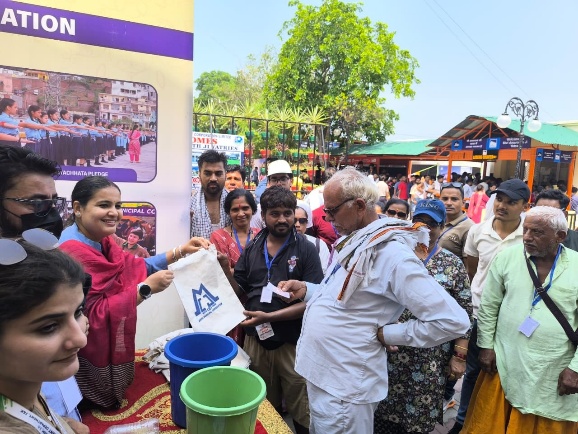
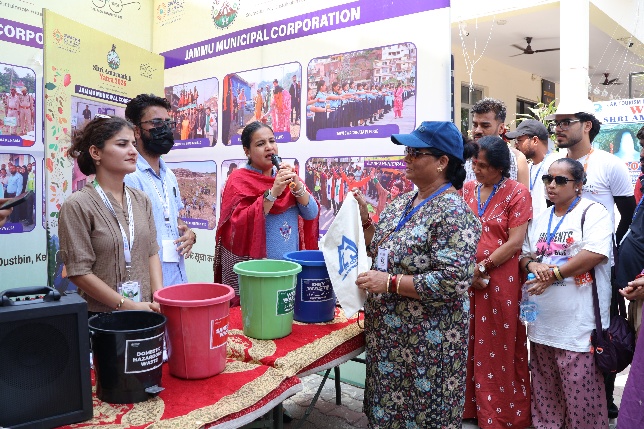
To bridge the gap between administrative planning and the pilgrim experience, 50 TULIP (The Urban Learning Internship Program) interns were deployed as green ambassadors at critical transit hubs. Armed with enthusiasm, these young TULIPs have become the friendly faces of problem-solving along the route. They actively give live, hands-on demonstrations to incoming groups of pilgrims, guiding them on how to navigate the newly installed four-way source segregation system. By physically showing Yatris how to separate their discards into Wet, Dry, Sanitary, and Special Care waste, the TULIPs have demystified scientific waste processing for the average citizen.
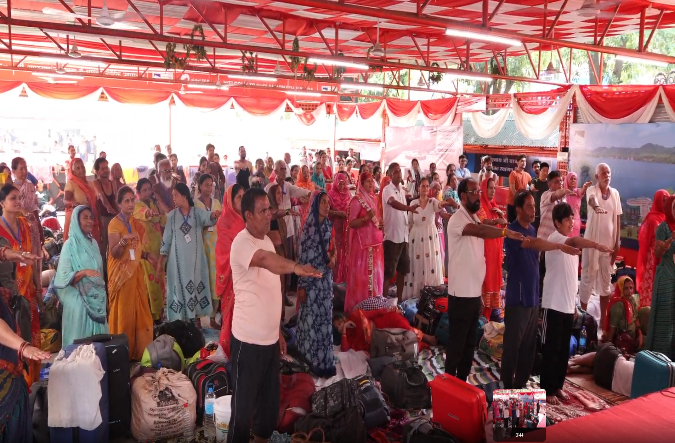
This educational push has ignited an extraordinary wave of civic pride among the devotees. Guided by the Swachh IEC team, large groups of pilgrims can frequently be seen gathering at transit camps to raise their hands in unison, taking a solemn pledge to protect the sanctity of the Yatra Marg. To make this pledge practical, the administration has distributed more than 10,000 eco-friendly jute and cloth bags to the travelers, urging them to completely abandon polybags. Pilgrims are also stepping up to carry durable steel bottles instead of single-use plastic, utilizing the clean drinking water installations provided along the highway.
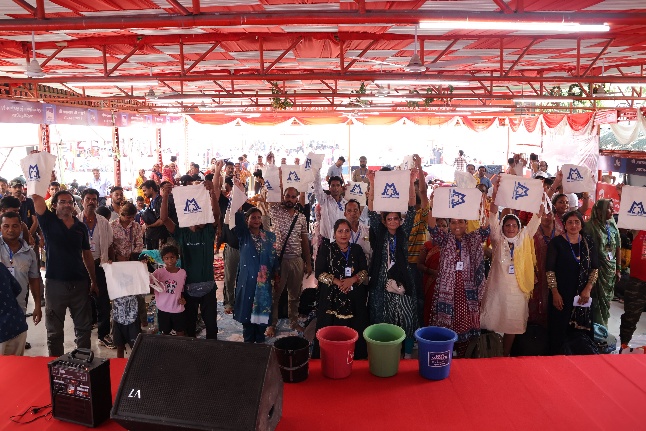
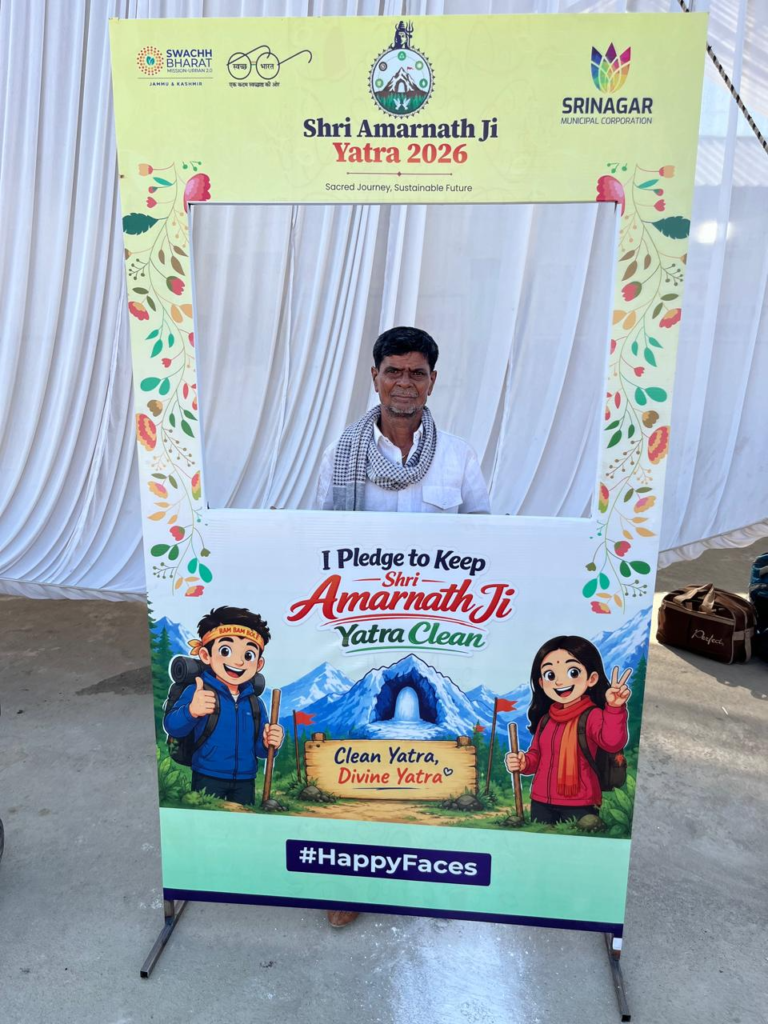
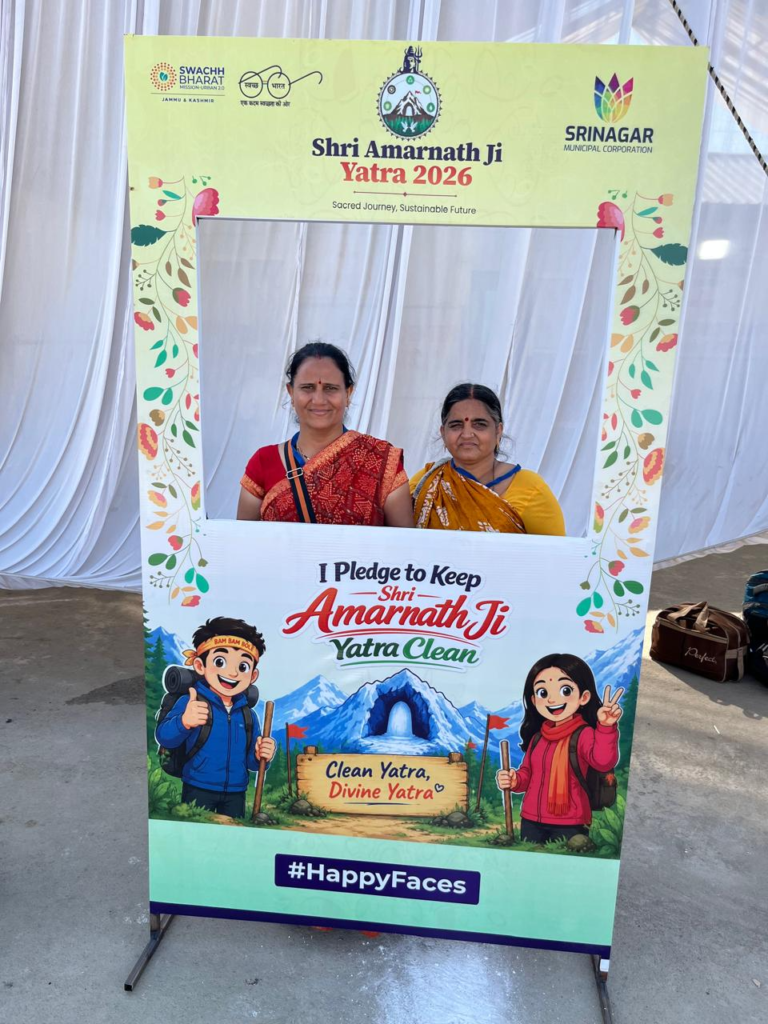
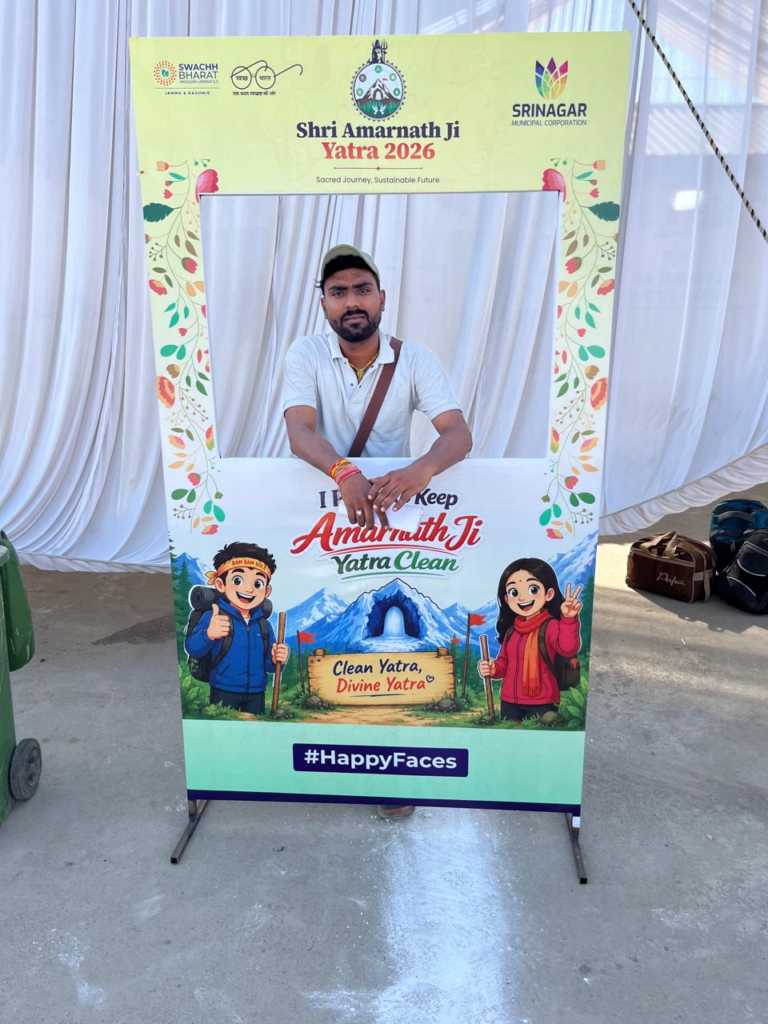
This spirit of conscious travel has created a vibrant social media movement. Brightly decorated selfie kiosks set up by the JMC and local municipal bodies have become major attractions along the route. Thousands of pilgrims are capturing their journey at the #ResponsibleYatris and #HappyFaces selfie points, flashing proud smiles alongside their reusable cloth bags. These shared moments have transformed environmental compliance from a rule into a badge of honor, spreading the message of a clean Yatra far beyond the mountains of Kashmir.
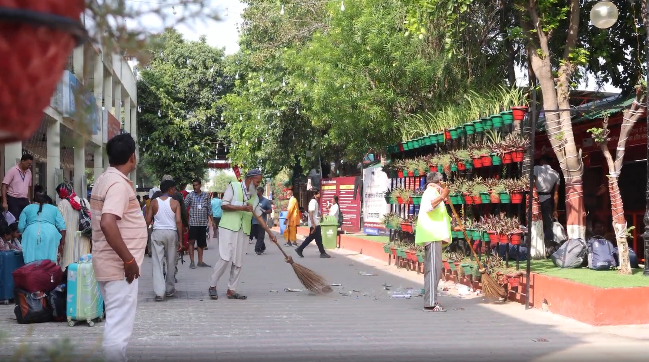
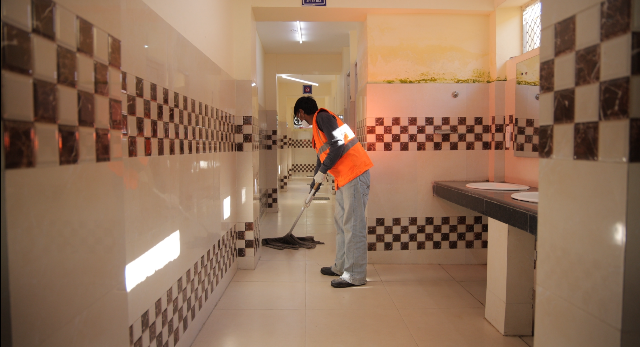
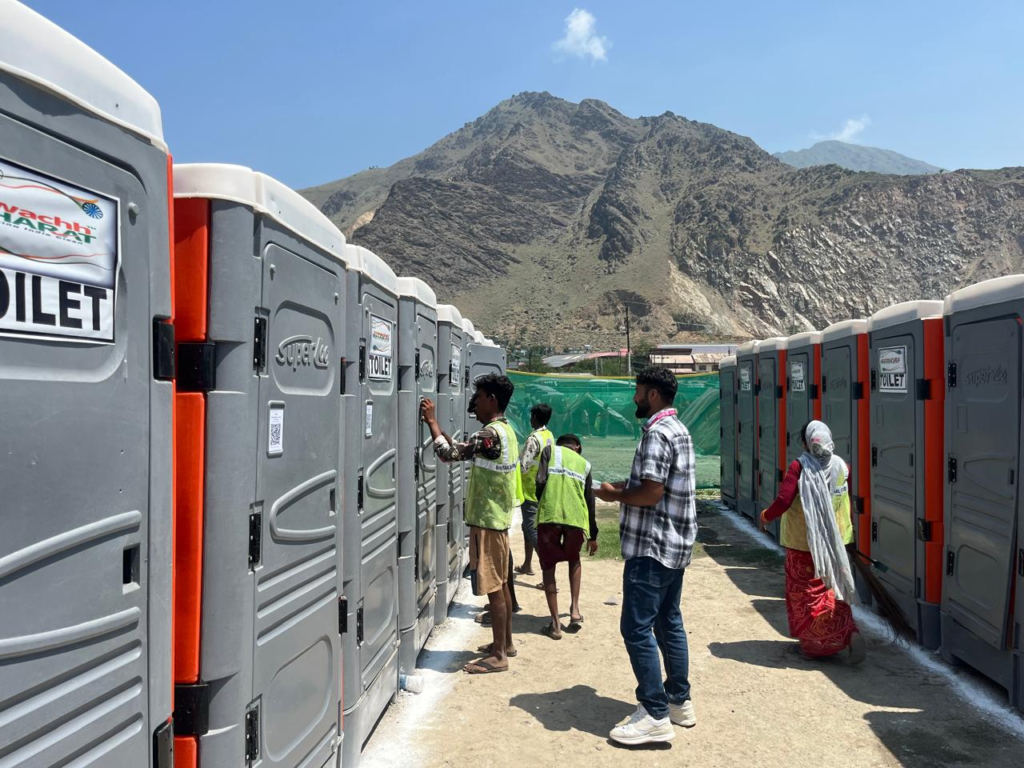
On the infrastructure front, the sheer scale of the operation is handled with invisible efficiency. Catering to a massive initial footfall of 1,42,861 pilgrims, the department established a robust sanitation network consisting of 1,432 toilets (646 permanent and 786 temporary), 649 bathrooms, and 385 urinals across all 44 lodgement centres and transit points. To maintain strict hygiene, comprehensive cleanliness drives are executed twice daily, keeping the structures disinfected and the main transit tracks continuously sanitized. To add an extra layer of accountability, a digital QR-code feedback system is affixed to every toilet unit. Pilgrims simply scan the code to share their real-time experience, a mechanism that has already captured over 7,000 prompt responses, allowing sanitation teams to respond immediately to any maintenance issues.
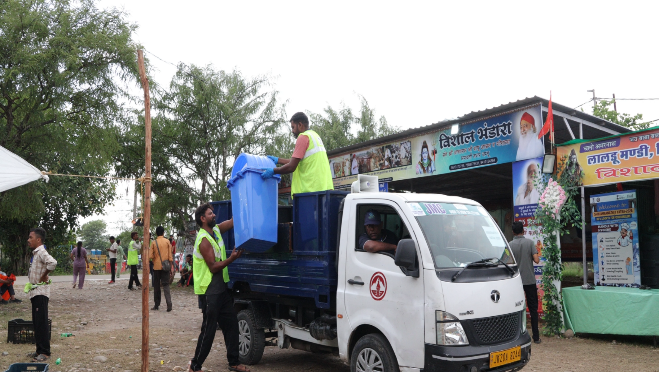
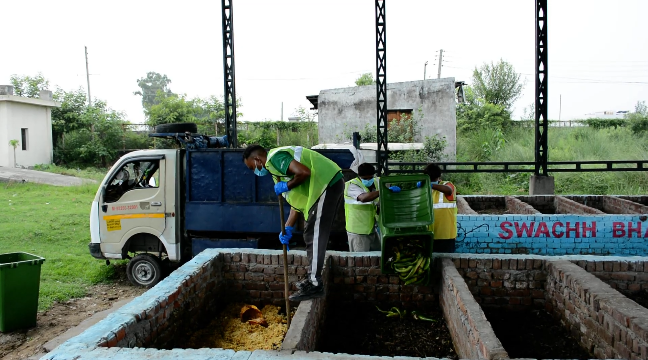
The ultimate success of this green pilgrimage is found in the final destination of the waste itself. The Yatra generates an average of 18.76 MT of waste daily, but rather than being abandoned to scar the landscape, it is integrated into a circular economy. All dry and plastic waste collected from the bins is systematically transported to nearby Material Recovery Facilities (MRFs), where it is sorted, baled, and sent for industrial recycling, ensuring zero plastic remains in the hills. Meanwhile, the 13.13 MT of wet waste generated daily from the community kitchens is routed directly to specialized processing centers, where it is scientifically converted into rich, organic compost.
As the Shri Amarnath Ji Yatra 2026 continues its spiritual run, the harmonious collaboration between the Housing and Urban Development Department, the JMC, the dedicated SafaiMitras, and the pilgrims themselves has rewritten the narrative of event management in sensitive eco-zones. It stands as a beautiful, living proof that when human devotion aligns with environmental awareness, the path we leave behind can remain as pure as the destination we seek.