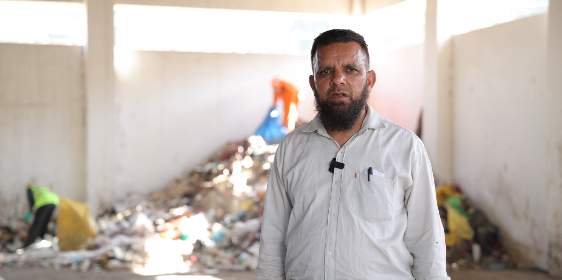
In the heart of the border district of Rajouri, the challenges of urban growth often manifest in the form of mounting waste. For years, the Municipal Council (MC) Rajouri struggled with the lack of a formal Material Recovery Facility (MRF), leading to an overwhelming accumulation of mixed garbage at the dumping sites. However, where others saw a crisis, Sanitary Inspector Riaz Ahmed saw an opportunity for systemic reform.
Riaz Ahmed understood that the traditional method of simply “dumping” was a ticking time bomb for the environment. Instead of waiting for high-tech infrastructure to arrive, he decided to leverage the resources at hand. Under his leadership, a proactive and manual intervention was launched directly at the dumping site a move that has since redefined waste management in the district.
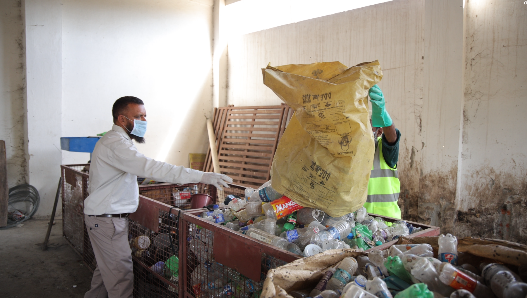
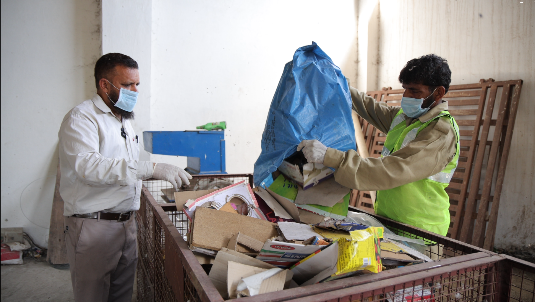
Riaz Ahmed’s strategy was simple but rigorous: segregation at the point of disposal. Recognizing that mixed waste is the biggest hurdle to recycling, he organized a systematic sorting process. For the first time in the council’s recent history, waste is now being meticulously categorized into four distinct streams:
• Dry Waste: Plastics, paper, and metals are recovered for recycling.
• Wet Waste: Organic matter is diverted to reduce methane emissions and soil leaching.
• Sanitary Waste: Processed separately to maintain hygiene and safety.
• Hazardous Waste: Handled with specific protocols to prevent toxic contamination of the local ecosystem.
This initiative has done more than just tidy up the site; it has significantly extended the life of the dumping grounds and reduced the environmental footprint of the entire town. By diverting recyclables and hazardous materials, Riaz has transformed the dumping site from a stagnant pile of trash into a hub of recovery and action.
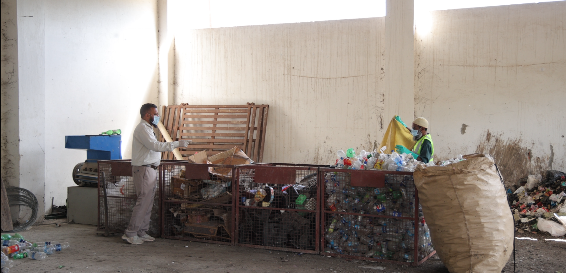
The success of this project serves as a powerful case study for the Swachh Bharat Mission (Urban 2.0 ). It demonstrates that while infrastructure is important, the “human element” the initiative of a dedicated public servant is what truly drives change. Riaz Ahmed’s work has become a blueprint for other small municipal bodies facing similar resource constraints.
Riaz Ahmed’s story is a testament to the fact that effective waste management starts with a change in perspective. By treating waste as a resource to be managed rather than a burden to be buried, he has protected the natural beauty of Rajouri for future generations. His hands-on leadership proves that even without an MRF building, a “Material Recovery Mindset” can achieve extraordinary results.
Through his dedication, Riaz Ahmed has turned the tides of waste in Rajouri, proving that one man’s proactive vision can lead an entire community toward a cleaner, greener, and more sustainable tomorrow.